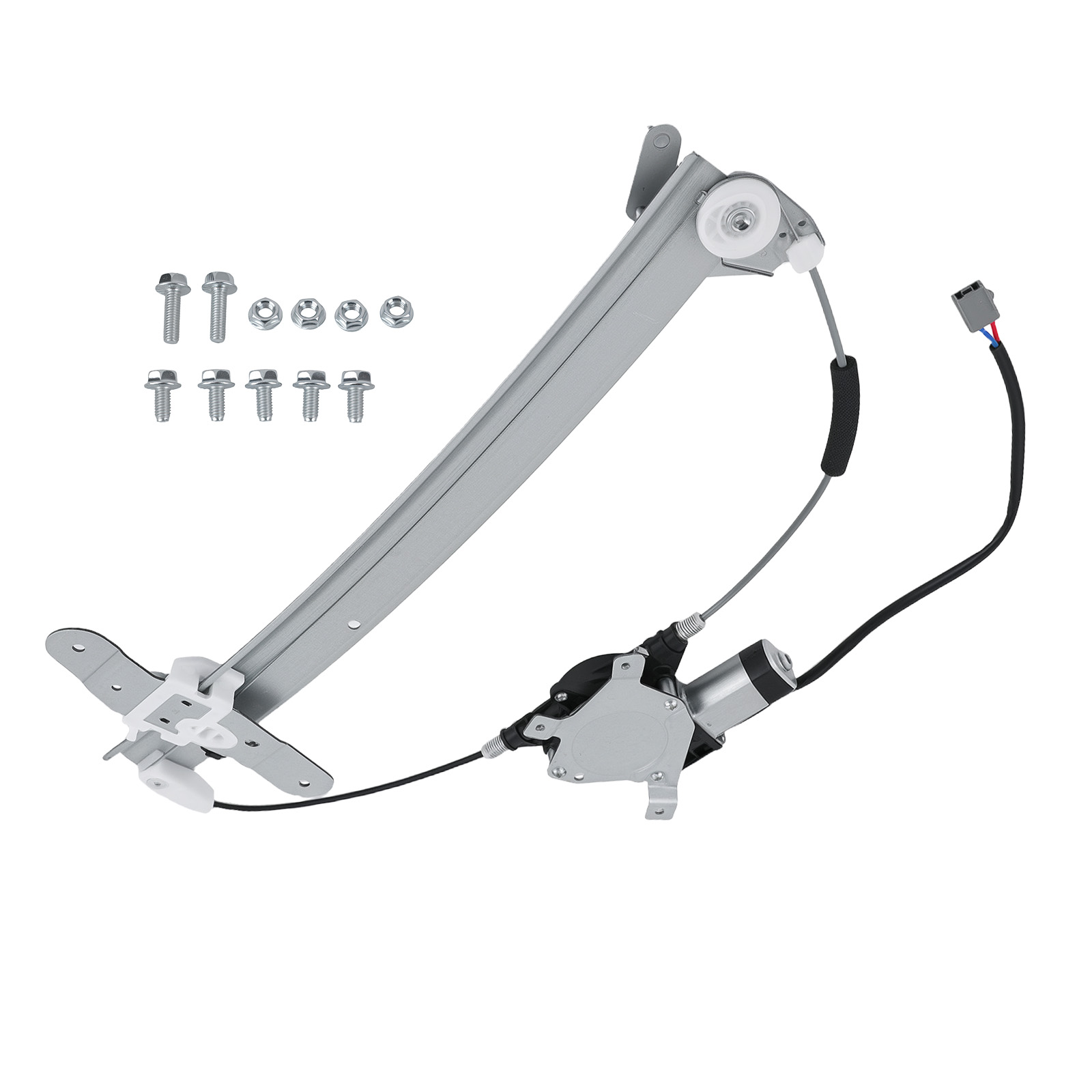

Photos from current listings. Actual item, color, and included accessories may vary.
Car Window Regulator Buying Guide
A car window regulator is the lift mechanism—cable, scissor, or gear-driven—that moves the glass up and down inside the door; the core trade-off is stamped-steel OEM-style construction with a sealed motor versus plastic-slider or thin-cable aftermarket units that fail early. Buy a regulator whose mounting pattern and motor connector match your door's factory holes and harness, or you will be drilling and splicing.


At a glance
- Category
- Body, Interior & Hardware Parts
- Data updated
- Nov 16, 2026
Current offers
Highlights
- OEM-style regulators use stamped steel rails and glass-lift plates; budget units often substitute plastic sliders and nylon pulleys that crack under repeated full-travel cycles.
- Cable-driven regulators dominate modern cars; scissor (X-arm) regulators remain common on older domestics and many trucks—the two are not interchangeable.
- Regulators ship with or without the motor; a with-motor assembly costs more but eliminates reusing a worn motor that can strip the new regulator's gear.
- Front and rear regulators are side-specific (left/right) and generation-specific; Lincoln Town Car 98-11 uses a distinct rear-left assembly with an integrated motor connector.
Best use cases
- Best fit: a single failed window on a 10+ year-old daily driver—buy a with-motor assembly matched to door side and model year to avoid reusing a tired motor.
- Best fit: fleet or high-mileage vehicles where the regulator is removed often—choose stamped-steel rails and sealed motor connectors over plastic-slider budget units.
- Wrong fit: rust-belt cars with a bent door shell or misaligned glass run channel—replace the regulator only after fixing the track, or the new unit will bind and fail.
- Skip: universal 'cut-to-fit' cable kits for a daily driver; they lack factory mounting points and correct cable tension, leading to repeated failures.
Buying tips
- Match by door side (left/right), position (front/rear), and body style—regulators for the same model year can differ between sedan and limousine trims.
- Prefer a with-motor assembly when the original motor has over 100k miles; a new regulator paired with a worn motor often strips the gear within months.
- Check the motor connector shape and pin count against your factory harness; Ford/Lincoln 98-11 Town Car uses a specific oval connector that aftermarket units may not replicate.
- Inspect the glass run channel and door alignment before installation; a binding channel overloads any regulator and is the leading cause of repeat failure.
Specs
| Drive Type | Cable vs scissor (X-arm) |
|---|---|
| Motor Included | With motor vs without motor |
| Rail Material | Stamped steel vs plastic slider |
| Position Fit | Front/rear, left/right specific |
Related searches
What to check before buying
- Confirm door side and position (front-left, rear-right, etc.) from the VIN or door tag—never from a photo of the opposite side.
- Measure the factory mounting bolt hole spacing and compare to the replacement's rail pattern before ordering.
- Verify the motor electrical connector type and pin count match your door harness; adapter pigtails are a sign of a mismatched unit.
- Inspect the glass run channel and door shell for bends or rust; replace worn channel felt before installing a new regulator.
FAQ
Data sources: eBay / Amazon listings and product attribute feeds Data updated Nov 16, 2026.
Some links on this page are affiliate links. If you buy after clicking one, we may earn a commission at no extra cost to you. This does not change which products appear here or their order. Affiliate disclosure.