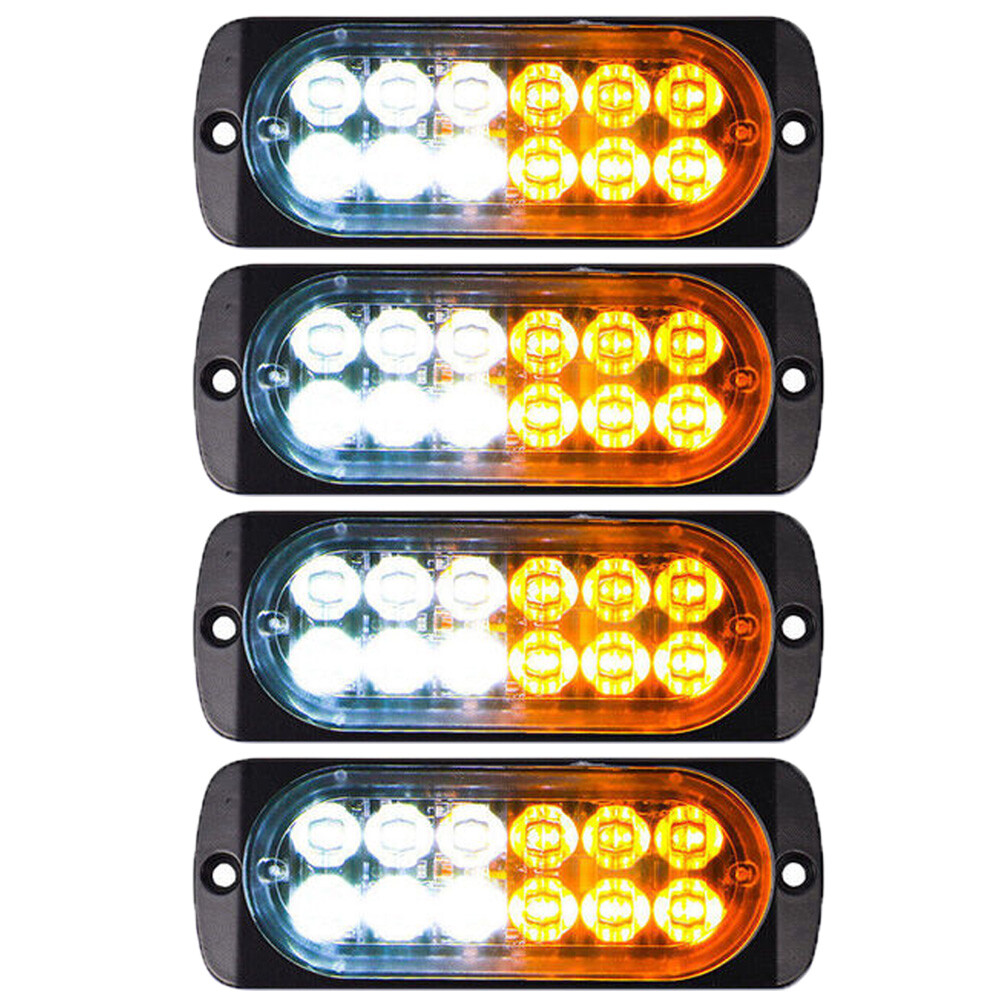

Photos from current listings. Actual item, color, and included accessories may vary.
Emergency Flashing Light Buying Guide
Emergency flashing lights are high-visibility warning beacons used on vehicles, trailers, and work sites to signal hazard or presence. The core trade-off is between low-cost single-mode LED units and multi-pattern SAE-rated strobes with proper weather sealing and vibration tolerance. Choose SAE J845/J595-rated, IP67-sealed units with multi-pattern controllers for road use; reserve unrated generic beacons for stationary, off-road, or temporary signaling only.


At a glance
- Category
- Automotive Lighting
- Data updated
- Nov 15, 2026
Current offers
Highlights
- LED count and optic design drive brightness: 12-LED arrays with focused reflectors deliver usable warning distance; bare diffused emitters wash out in daylight.
- Pattern controller matters: multi-pattern flash modules (rotating, quad, double-flash) are required for SAE Class 1/2 compliance; single steady-burn units fail road-use standards.
- Sealing grade separates durable from disposable: IP67/IP69K potted housings survive pressure washing and rain; IP44 or unrated units corrode at the gasket and lens seam.
- Mounting architecture determines vibration life: rubber-isolated bolt bases and die-cast aluminum bodies outlast adhesive-backed or thin ABS housings on vehicle exteriors.
Best use cases
- Best fit: SAE-rated amber multi-pattern strobes with IP67 sealing and bolt-on rubber mounts for road-going work trucks, tow trucks, and utility vehicles.
- Best fit: 12/24V dual-voltage magnetic-base beacons with cigarette-lighter plugs for temporary roadside use and rental/loaner vehicles.
- Wrong fit: unrated 12-LED generic strobes for highway or DOT-regulated work zones—skip them and buy SAE J845 Class 2 or better.
- Wrong fit: steady-burn or single-pattern beacons for moving vehicles—choose multi-pattern controllers so the light reads as active hazard signaling.
Buying tips
- Match voltage first: confirm 12V-only vs 12/24V dual-voltage; 24V truck systems will destroy 12V-only beacons without a converter.
- Size the beacon to the vehicle: Class 1 for highway and high-speed exposure, Class 2 for urban/low-speed work, Class 3 for off-road and stationary marking.
- Count LEDs and check optic type: 12-LED focused arrays outperform higher-count diffused units; look for reflector cups or TIR lenses, not bare domes.
- Verify pattern count and memory: multi-pattern units should retain the last-used pattern after power-off; lack of memory means re-selecting every ignition cycle.
Specs
| Light Source | 12-LED to 40-LED focused arrays |
|---|---|
| Sealing Grade | IP67 / IP69K vs IP44 unrated |
| Voltage | 12V-only vs 12/24V dual-voltage |
| SAE Class | Class 1 / Class 2 / Class 3 / unrated |
Related searches
What to check before buying
- Measure mounting surface and clearance: confirm bolt-hole spacing, base footprint, and height clearance before ordering a bolt-on or magnetic base.
- Check vehicle electrical capacity: confirm fuse/relay rating and whether the beacon draws from a switched or constant circuit.
- Verify environmental sealing for your climate: IP67 minimum for rain/pressure-wash exposure; IP69K for steam cleaning and heavy washdown.
- Confirm companion parts: mounting brackets, extension cables, and pattern controllers are often sold separately—order them with the beacon.
FAQ
Data sources: eBay / Amazon listings and product attribute feeds Data updated Nov 15, 2026.
Some links on this page are affiliate links. If you buy after clicking one, we may earn a commission at no extra cost to you. This does not change which products appear here or their order. Affiliate disclosure.