Choosing an overland mobile power & solar setup starts with one practical question: do you need a voltage-sensitive relay to manage a lead-acid auxiliary battery, or a DC-to-DC charger that can also accept solar input? The MICTUNING 12V 140A Smart Dual Battery Isolator and Atem Power 20A DC-to-DC Battery Charger serve different roles, so the right choice depends more on your system design than on the headline current figures.
Quick verdict
Choose the MICTUNING 12V 140A Smart Dual Battery Isolator for a lead-acid dual-battery arrangement built around alternator charging, automatic or manual disconnect, and live voltage monitoring. Choose the Atem Power 20A DC-to-DC Battery Charger when solar input, multi-stage charging, or support for Li-ion and several lead-acid battery types matters. The absolute price gap is $114.00, making the feature fit the key decision rather than a direct performance ranking.
Compact comparison
| Product | Listed price | Primary role | Key distinctions |
|---|---|---|---|
| MICTUNING 12V 140A Smart Dual Battery Isolator | USD 24.72 | Voltage-sensitive relay and isolator | 140A current rating, LED voltmeter, lead-acid dual-battery use |
| Atem Power 20A DC-to-DC Battery Charger | USD 138.72 | Multi-stage DC-to-DC charger | Dual input, built-in MPPT regulator, selectable battery profiles |
Where each product wins
MICTUNING wins for a focused relay setup. Its voltage-sensitive relay, charger disconnect function, and integrated LED voltmeter directly address alternator-based dual-battery management. The description also identifies use with 12V lead-acid systems, including truck, RV, UTV, boat, and marine applications.
Atem Power wins for a broader charging system. Dual input and a built-in MPPT regulator make it the more relevant choice when solar charging is part of the plan. Its multi-stage design and selectable profiles cover Lead Acid, AGM, Gel, calcium, and Li-ion batteries, giving it a different role from a basic isolator.
Product notes
MICTUNING 12V 140A Smart Dual Battery Isolator
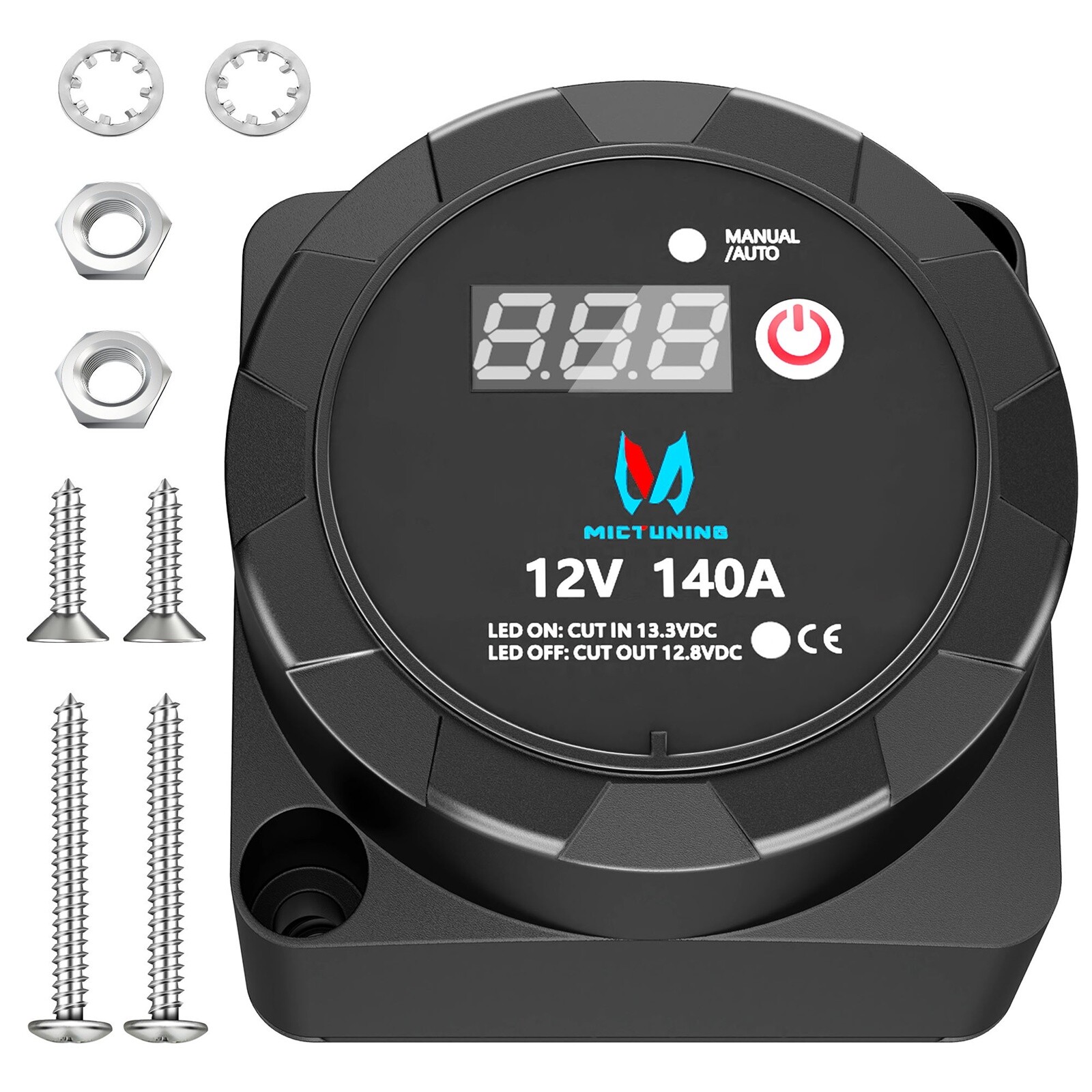
The case for the MICTUNING isolator is straightforward: it combines a voltage-sensitive relay with automatic or manual charger disconnect and an integrated LED voltmeter. That suits an overland rig where the priority is managing a lead-acid auxiliary battery from a single alternator while keeping live voltage visible. The quick connector and normally open contact type are also specified, and the product carries a 140A current rating. The clear limitation is battery chemistry: the description explicitly says it is not for lithium batteries. This makes the MICTUNING a focused choice for lead-acid dual-battery systems rather than a chemistry-flexible charger. Its 12V isolator role is the reason to choose it, not solar charging functionality.
Atem Power 20A DC-to-DC Battery Charger
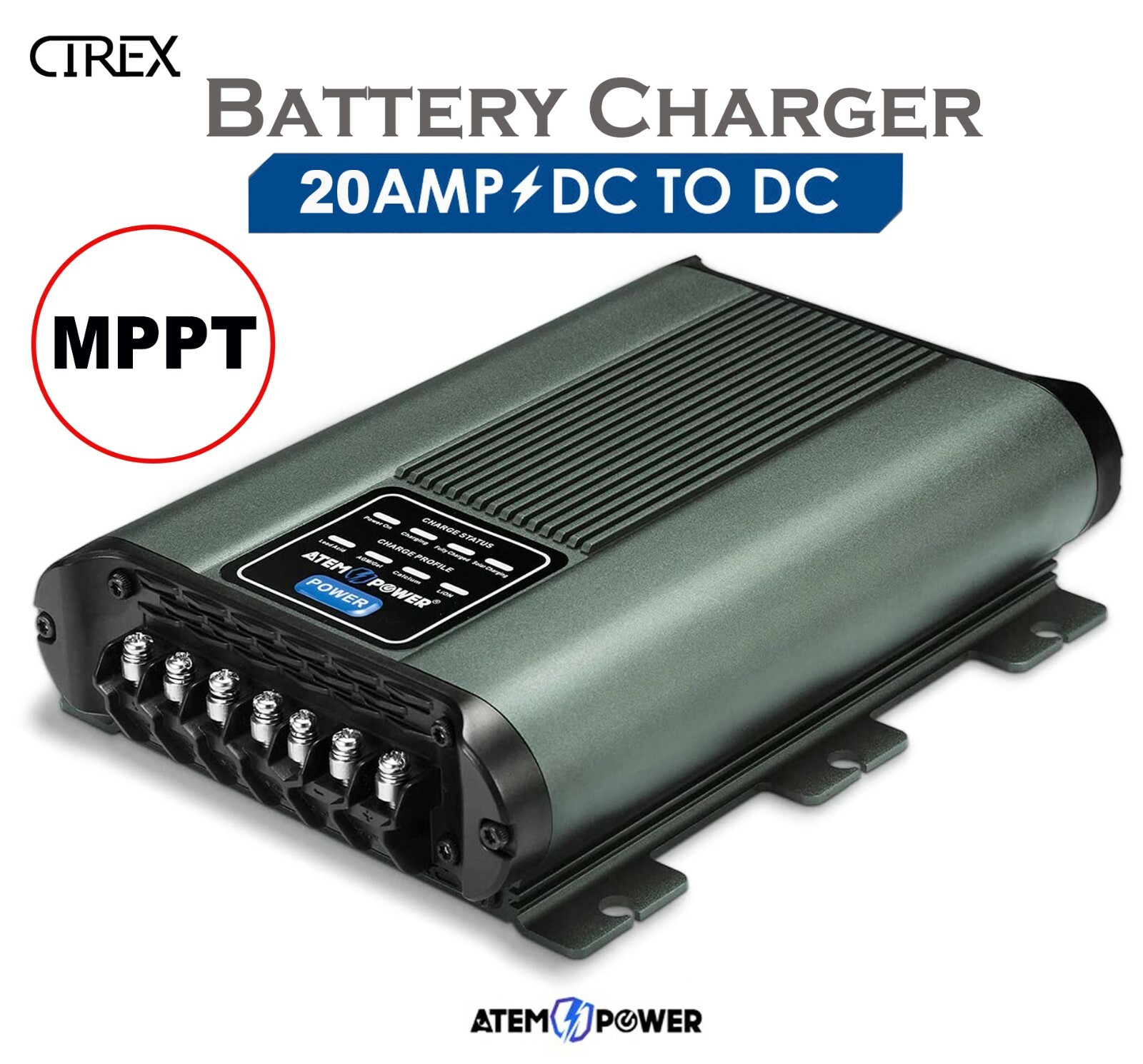
The Atem Power charger centers on a 20A DC-to-DC charging role rather than a voltage-sensitive relay. It offers dual input and a built-in MPPT regulator, making it the more relevant pick when solar charging belongs in the plan. Its multi-stage charger type and selectable profiles for Lead Acid, AGM, Gel, calcium, and Li-ion provide broader stated battery-chemistry coverage. Reverse-connection, over- and under-voltage, over-temperature, and spark-free protections are also included among its features. The trade-off is functional: it is a charger, not the straightforward VSR-and-voltmeter arrangement described for the MICTUNING. Choose Atem Power for integrated charging flexibility, but do not select it if your requirement is specifically a basic voltage-sensitive isolator.
Final choice by use case
- Lead-acid auxiliary battery with alternator charging: Choose MICTUNING for its voltage-sensitive relay, charger disconnect, and LED voltmeter.
- Solar-assisted overland charging: Choose Atem Power for dual input and the built-in MPPT regulator.
- Li-ion battery profile: Choose Atem Power, whose charging description includes Li-ion; the MICTUNING description excludes lithium batteries.
- A simple relay-centered system: Choose MICTUNING because its title and description identify an isolator and voltage-sensitive relay rather than a multi-stage DC-to-DC charger.
In short, MICTUNING is the direct fit for a lead-acid VSR setup, while Atem Power is the more suitable route when solar input and selectable charging profiles are central to the build.