When your car's 12V outlet needs to handle two devices at once, you have a basic choice: a straightforward dual USB adapter that shows battery voltage, or a fast-charging socket that tops up compatible phones much quicker. Both fit in a car power setup, but they serve different priorities.
Quick Verdict
If you want battery monitoring and a simple two-port USB outlet, the Dual USB Voltmeter Socket Splitter at $15.95 makes sense. If your phone supports Power Delivery or Quick Charge and you want faster top-ups, the PD + QC3.0 Dual USB Fast Charger at $29.95 is worth the higher price. The $14 gap between them is the real decision point.
At a Glance
| Feature | Dual USB Voltmeter Socket Splitter | PD + QC3.0 Dual USB Fast Charger |
|---|---|---|
| Price | $15.95 | $29.95 |
| Price bar | ||
| Charging output | 5V 1A / 5V 2.1A per port | QC3.0 and PD profiles up to 20V/1.5A, 60W max |
| Input voltage | 12V (voltmeter reads 12-24V) | DC 12V-24V |
| Protection | Reverse polarity and short circuit protection | Over-load, over-current, and short circuit protection |
| Extras | Waterproof casing, real-time battery voltage monitoring | Fireproof construction, digital LED display, dustproof |
Where Each Product Wins
The Dual USB Voltmeter Socket Splitter wins for the driver who wants a clear view of battery health while charging. Its voltmeter reads DC voltage in the 12-24V range, and the waterproof casing adds a layer of protection for an outlet that may be exposed to splashes.
The PD + QC3.0 Dual USB Fast Charger wins for charging speed and compatibility. It supports QC3.0 and Power Delivery standards, works with a wide range of phones and tablets, and puts out up to 60W total, enough to recharge two compatible devices quickly.
Product Notes
Dual USB Voltmeter Socket Splitter
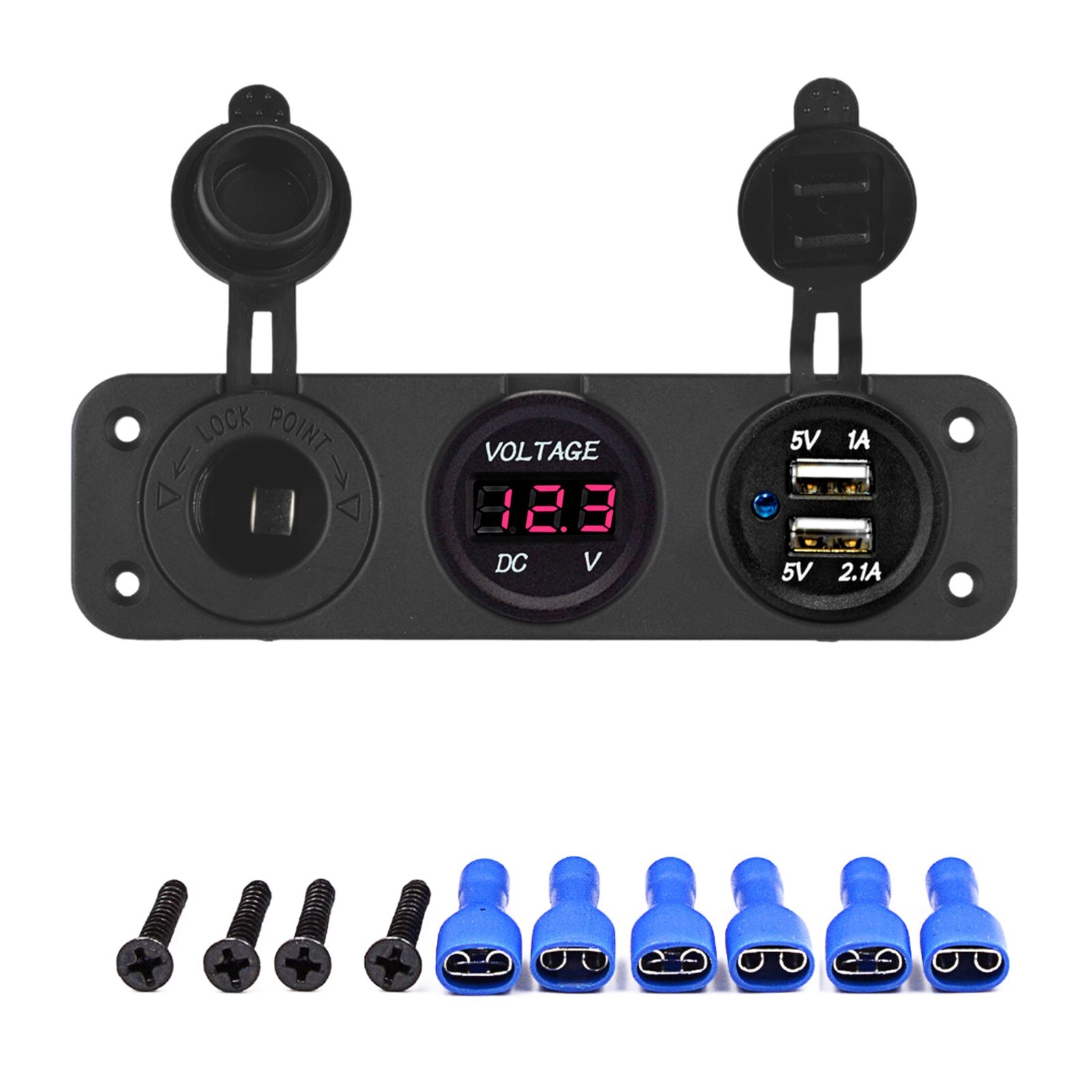
This adapter gives you two USB ports plus a voltmeter that monitors battery voltage in real time. The reverse polarity protection and short circuit protection help keep the connection safe, and the waterproof casing is a practical touch for a car outlet. Each port can deliver 5V at 1A or 2.1A, and the independent amp output means using both ports won't reduce the current per device. The trade-off is charging speed: it tops out at standard 5V charging, so it won't fast-charge a PD or QC3.0 device the way the pricier model can. It's best for someone who prioritizes battery health visibility and a lower price over rapid charging.
PD + QC3.0 Dual USB Car Fast Charger
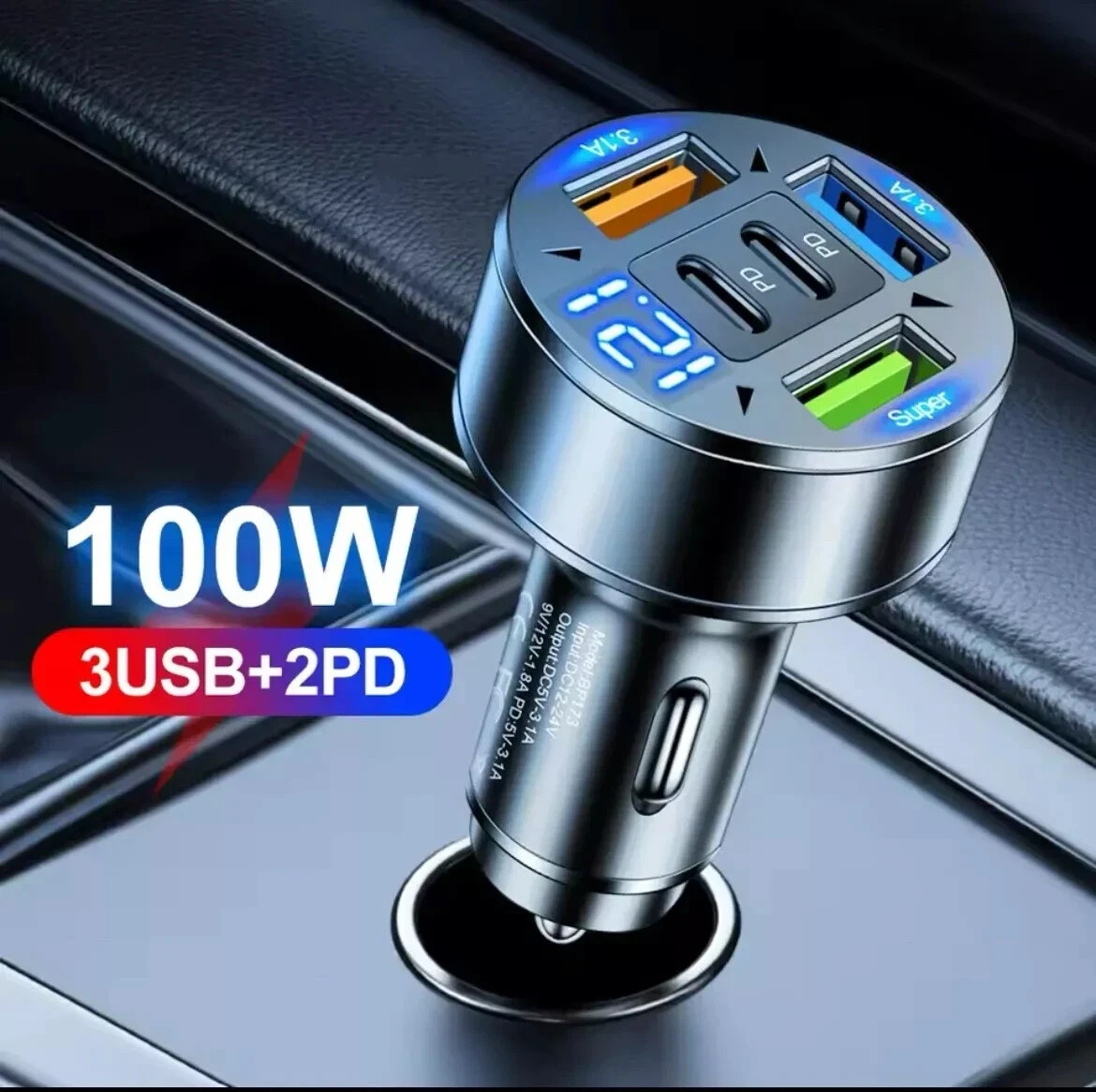
This charger is built around fast charging: PD + QC3.0 USB ports can charge two compatible devices at once and the max output reaches 60W (30W per port). It accepts 12V-24V input, making it usable in a wider range of vehicles. The fireproof and flame-retardant construction, dustproof design, and digital LED display add everyday practicality. It also includes over-load, over-current, and short circuit protection. The main limitation is the higher price and the fact that you'll only enjoy the speed advantage if your devices support the fast-charging protocols. If your phone is a standard 5V device, the basic model will do the same job for less.
Final Choice by Use Case
For simple dual USB charging and a constant battery voltage readout, go with the Dual USB Voltmeter Socket Splitter. It covers the essentials and keeps the purchase price down.
For quicker charging and support for Power Delivery and Quick Charge, pick the PD + QC3.0 Dual USB Fast Charger. It costs more but brings modern charging speeds to your car power setup.