Your car's single 12V socket can only do so much. When you need to charge multiple phones, run a dash cam, or plug in a device that expects a wall outlet, you have two routes: expand the socket you already have with a splitter, or convert 12V DC power into 110V AC with an inverter. The right pick depends on what you carry and how much you want to spend. Both are affordable enough to keep one in the car, so the real question is which you will rely on first. The best approach is to match the power source to the devices you actually carry.
Quick Verdict
The 4-way socket splitter is the better everyday value for most drivers because it costs less and expands what your existing socket can handle. The power inverter is the better buy when you need to run a standard household plug from your car. Think of the splitter as a power strip for your car and the inverter as a bridge between your car battery and a wall plug.
At a Glance
Here is how the two stack up.
| Feature | Car Cigarette Lighter 4-Way Splitter | 200W Power Inverter |
|---|---|---|
| Price | $8.59 | $15.99 |
| Outputs | 4 x 12V sockets + 3 charging ports | 1 x 110V AC outlet + 1 charging port |
| Input voltage | DC 12V/24V | DC 12V only |
| Power capacity | 120W total (60W max per socket) | 200W RMS, modified sine wave |
| Protection suite | 10A fuse, over-current, over-voltage, low-voltage, overheat, short-circuit | Reverse polarity, over-voltage, low-voltage, overheat, short-circuit |
Where Each Product Wins
The splitter wins for multi-socket use: it accepts both 12V and 24V input and gives you four sockets for several accessories at once. That makes it a strong match for road-trip gear like a tire inflator, dash cam, and phone charger at the same time.
The inverter wins for devices that need a different kind of power, and its LED screen shows real-time input voltage so you can track battery status while you run one main device.
Product Notes
Car Cigarette Lighter 4-Way Socket Splitter
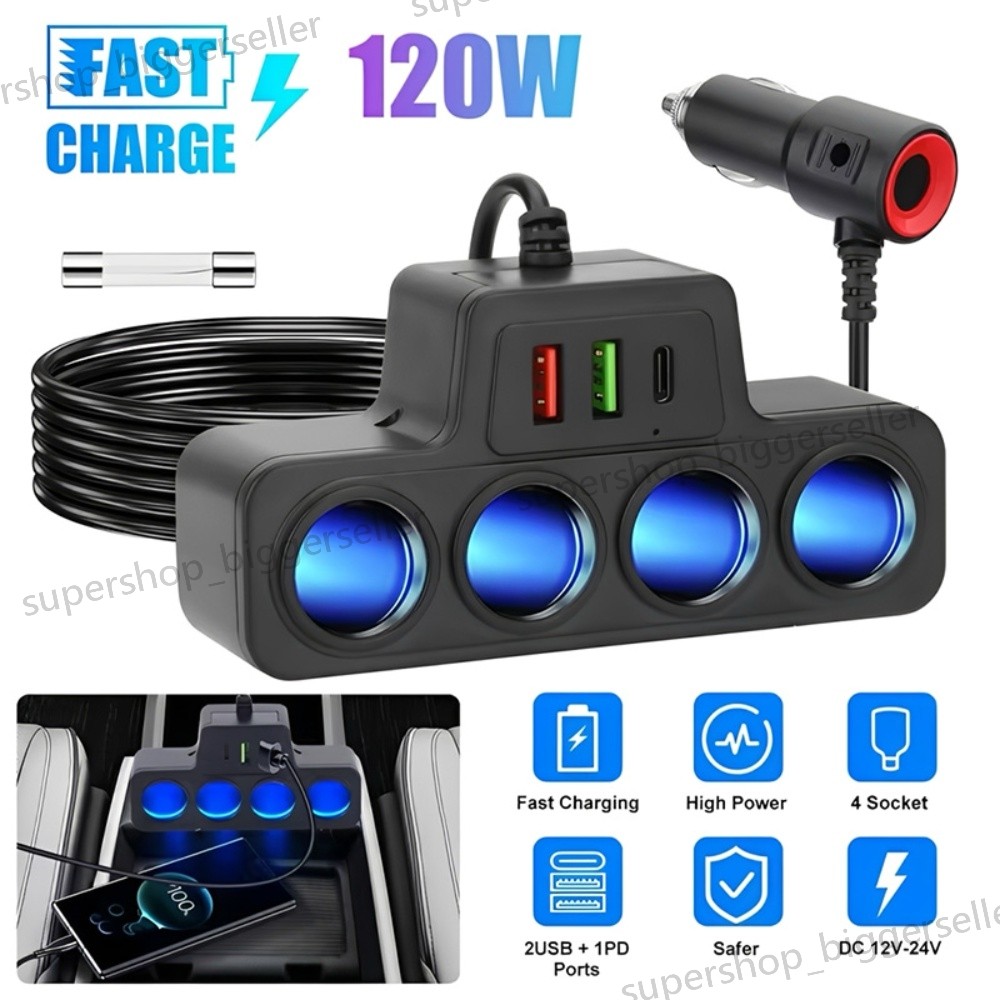
This splitter gives you four 12V sockets and three USB charging ports in one hub. The USB ports support PD fast charging, and the 120W total budget means you can run several accessories at once, with up to 60W available per socket. The 60cm cable gives you some reach from the dash, and the unit works on both 12V and 24V systems. That makes it a good base for road-trip gear like a tire inflator and dash cam. It keeps the dashboard tidy. The main limitation is that it only outputs 12V and USB power, so anything that needs a standard AC wall plug will not run from this hub.
200W Car Power Inverter
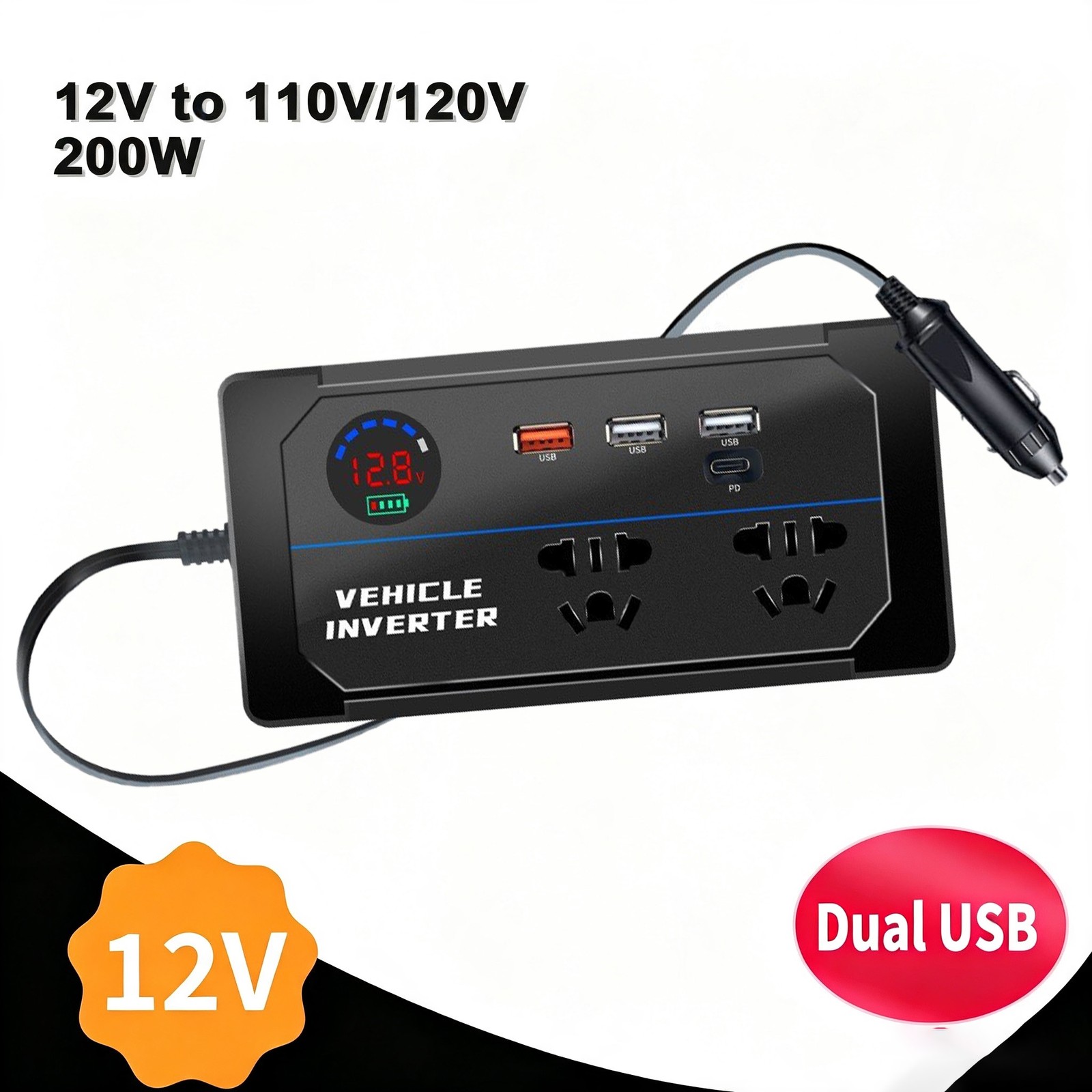
The inverter adds a 110V AC outlet to your car's 12V socket, which is the right tool when you need to power a small device that expects a wall plug. The LED screen shows real-time input voltage so you can track battery status. The 200W RMS output is a modified sine wave. It also has a 36W USB port for charging a phone or tablet. The limitation is that it is designed for 12V systems only, and high-power appliances like hair dryers or electric heaters are not recommended because they can blow the fuse. It is a compact way to bring a touch of household power with you.
Final Choice by Use Case
If your regular car kit is phones, dash cams, and 12V accessories, the 4-way splitter is the sensible pick. If you need to power something that doesn't plug into your car's 12V socket, the inverter is worth carrying. When your vehicle runs on 24V, the splitter is the one that fits. If you often work from your car, the inverter's outlet is a useful backup; if you just need to keep everyone's devices topped up, the splitter is the simpler setup. If you're still undecided, start with the splitter and add the inverter later if you find yourself wishing for a wall plug. That way, you will leave the right unit plugged in for your typical drive.