Every car eventually ends up with one accessory socket and a pile of devices that need power: a phone, a dash cam, a portable fridge, maybe a laptop on a road trip. The question is whether you need to split the socket you already have or convert that socket into a different kind of power. These two accessories answer that in very different ways, and choosing between them comes down to what you carry.
Quick verdict
If your issue is limited sockets and slow phone charging, choose the 7-in-1 splitter. If your travel gear needs more than a car socket can deliver, choose the 300W inverter.
What to consider
Before buying car power gear, think about the devices you plug in most. A phone or dash cam draws little and works fine with a simple USB port. A laptop charger, camera battery charger, small TV, or game console often wants a standard wall outlet. Also consider how much total power those devices may use at once. The splitter is limited to 120W total, while the inverter handles up to 300W, so neither one is meant for large appliances.
At a glance
| 7-in-1 4-way splitter | 300W power inverter | |
|---|---|---|
| Price | $8.99 | $57.10 |
| What it provides | Four 12V sockets plus three fast-charge USB ports | Dual 110V AC outlets plus USB-C/USB-A ports |
| Total output | 120W (60W max per socket) | 300W |
| USB charging | 42.5W max across three ports | 24W fast charging |
| Input voltage | DC 12V-24V | DC 12V |
Where each product wins
- The 7-in-1 splitter is the pick when your priority is expanding how many devices can share the car's existing socket. It accepts both 12V and 24V vehicles, so it works across a range of cars, trucks, and SUVs.
- The 300W inverter is the pick when the devices you carry need more than a car socket can directly deliver.
Product notes
7-in-1 4Way Car Cigarette Lighter Socket Splitter Fast Charger Power Adapter 12V
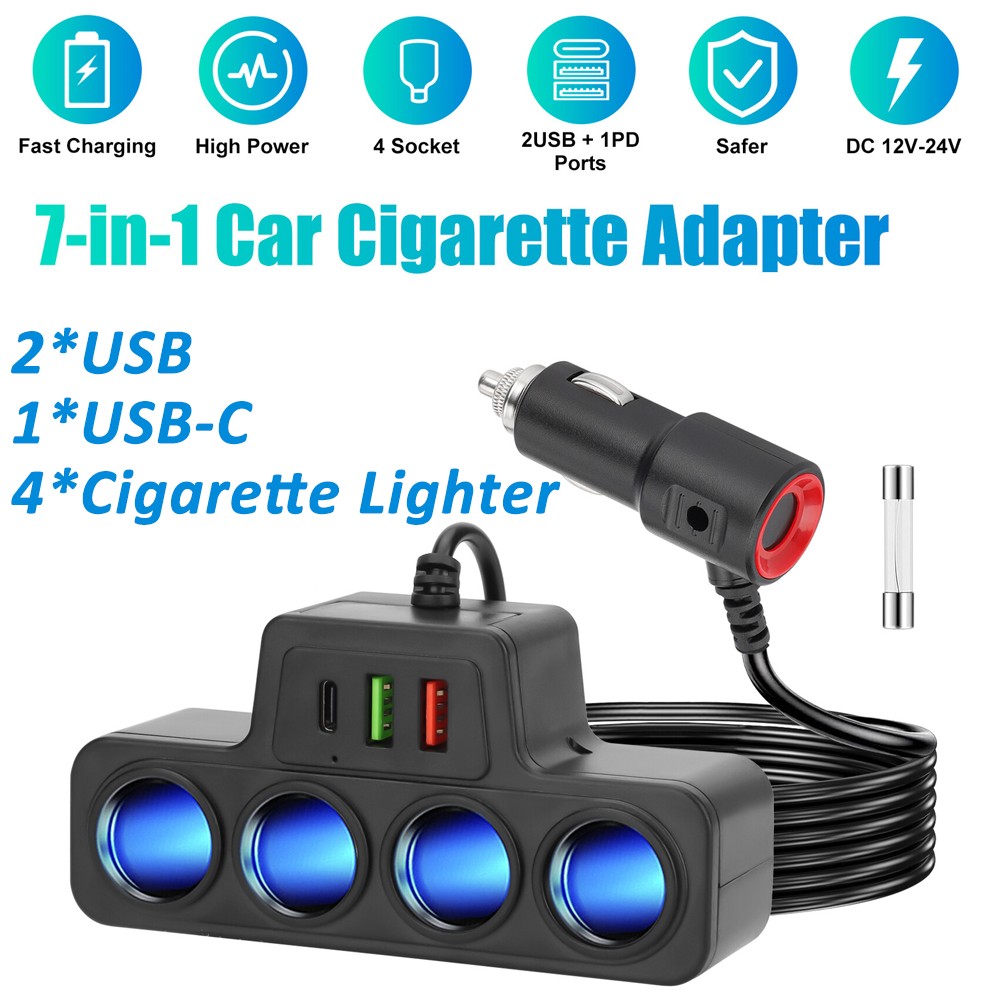
The 7-in-1 splitter is the straightforward way to end the one-socket bottleneck. It plugs into a single DC outlet and gives you more places to connect gear. Its 60cm/23.6in cable lets you route it to where devices actually sit, and the 10A fuse plus over-current, over-voltage, and short-circuit protection help keep your car's electrical system safe. The trade-off is power: this is built for phone chargers, dash cams, and small accessories, not high-draw appliances. It's also a plastic adapter, so treat it as a convenience add-on rather than a hard-duty power hub. If your routine includes only light electronics, this simple accessory solves the everyday shortage without adding complexity.
300W Car Power Inverter
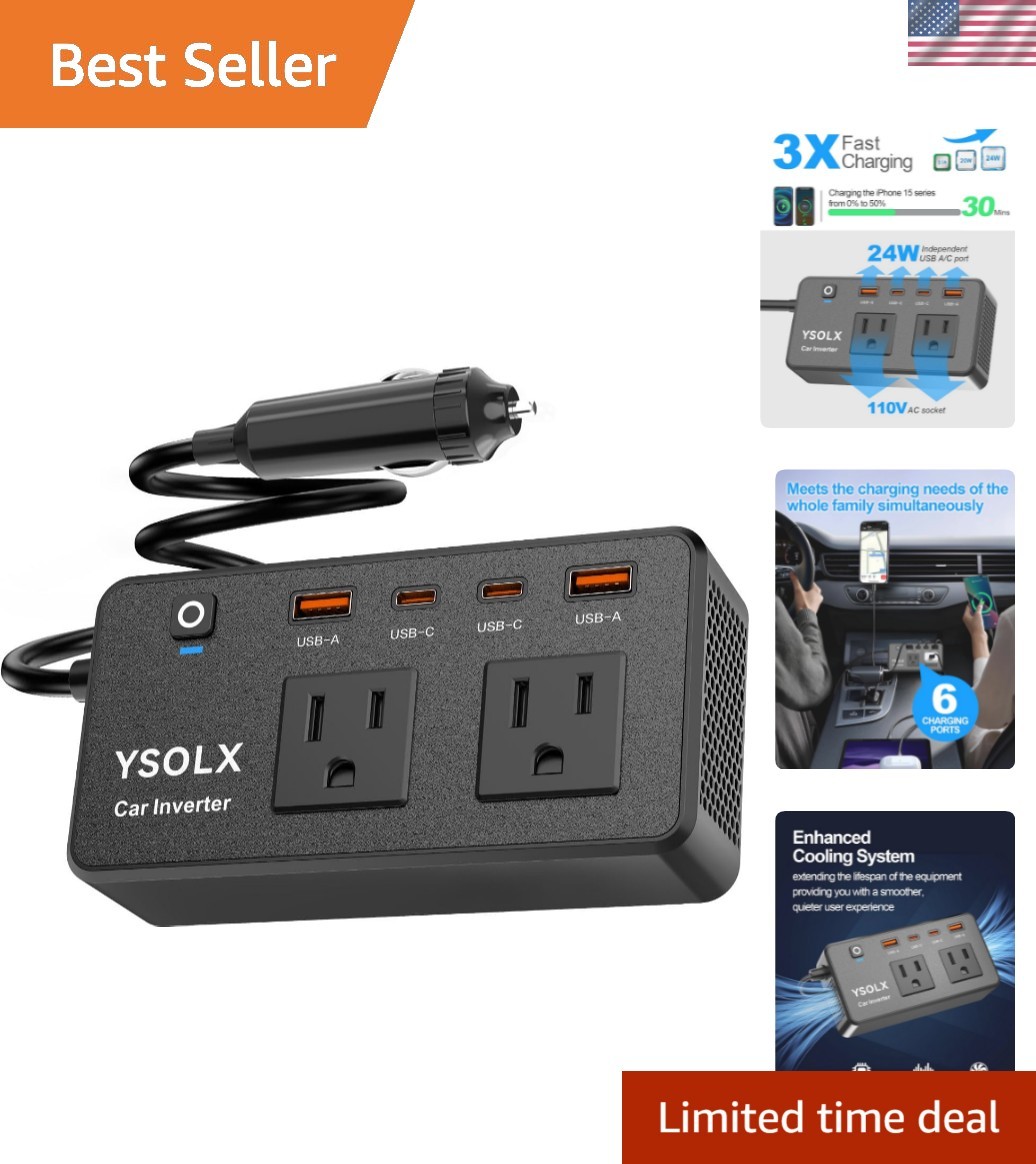
When the gear you travel with won't run from a basic car adapter, the inverter makes sense. It plugs into your vehicle's 12V DC accessory socket and gives you a familiar power source for laptops, camera chargers, small TVs, and game consoles. The wattage ceiling means modest devices are the realistic use, and high-draw appliances are out of range. If you only need to charge phones and add sockets, the splitter is the simpler choice. But when you need more than a lighter socket can provide, the inverter is the more complete tool.
Final choice by use case
For everyday driving with phones, dash cams, and small accessories: Choose the 7-in-1 splitter. It keeps multiple light devices charged without adding another electrical system to manage.
For trips where laptops, cameras, and small electronics travel with you: Choose the 300W inverter. It gives you a way to run them away from home.