When you need extra power in the car, the 12V socket is usually where you start. What you plug into it determines whether you get AC convenience or fast USB charging. This head-to-head puts the Car Inverter Power Converter Plug Adapter 12V To 110V Outlet Cigarette Lighter against the Lot 12V PD + QC3.0 Dual USB Car Fast Charger Power Socket Outlet LED Voltmeter so you can decide with confidence.
Quick verdict
Choose the Car Inverter if powering a small 110V device is your priority. Choose the Lot 12V PD + QC3.0 Dual USB Car Fast Charger if fast phone and tablet charging matters more. The two are separated by about $5.07 in listed price, and their strengths barely overlap.
At a glance
| Product | Listed price | Best for | Output indicator |
|---|---|---|---|
| Car Inverter Power Converter Plug Adapter 12V To 110V Outlet Cigarette Lighter | USD 24.88 | 110V AC outlet + basic USB | |
| Lot 12V PD + QC3.0 Dual USB Car Fast Charger Power Socket Outlet LED Voltmeter | USD 29.95 | Fast USB charging for two devices |
Where the inverter wins
The inverter's whole job is to give you an AC outlet. It provides 100W of continuous DC-to-AC power and 300W of surge capacity, so small electronics that expect 110V have something to plug into. It also includes a 2.1A USB port, a built-in fuse, automatic shutdown protection, and a swiveling adjustable plug. This is the pick when you specifically need AC power from a 12V socket.
Where the PD+QC3.0 charger wins
The charger focuses on speed. With dual USB ports supporting PD and QC3.0, two compatible devices can charge at once at a combined maximum of 60W. It also has a digital LED voltmeter to show connection status and protection against over-load, over-current, and short circuits. If your daily car power need is mostly phone charging, this is the stronger match.
Product notes
Car Inverter Power Converter Plug Adapter 12V To 110V Outlet Cigarette Lighter
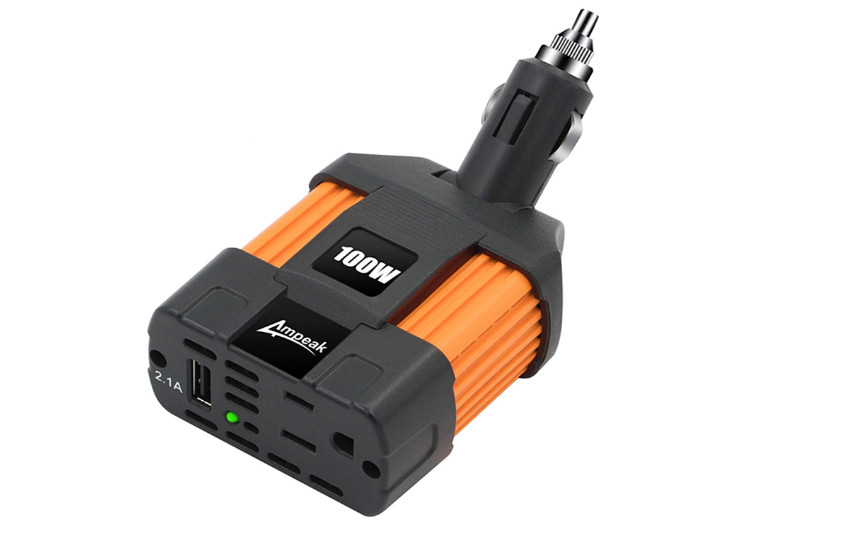
This inverter turns your 12V socket into a 110V AC source, which is the main reason to pick it. It provides 100W continuous power and 300W surge, and the AC socket includes a ground and a 2.1A USB port on the side. The adjustable plug design lets you angle the unit in tighter spaces, and its built-in fuse and automatic shutdown protections are reassuring when you're drawing power for a while. The trade-off: the USB port is a standard 2.1A port rather than a fast-charging PD or QC3.0 port, so it won't deliver the same charging speed as a dedicated fast charger. It also carries a lower listed price than the charger, so if AC output is what you need, you're spending less for that capability.
Lot 12V PD + QC3.0 Dual USB Car Fast Charger Power Socket Outlet LED Voltmeter
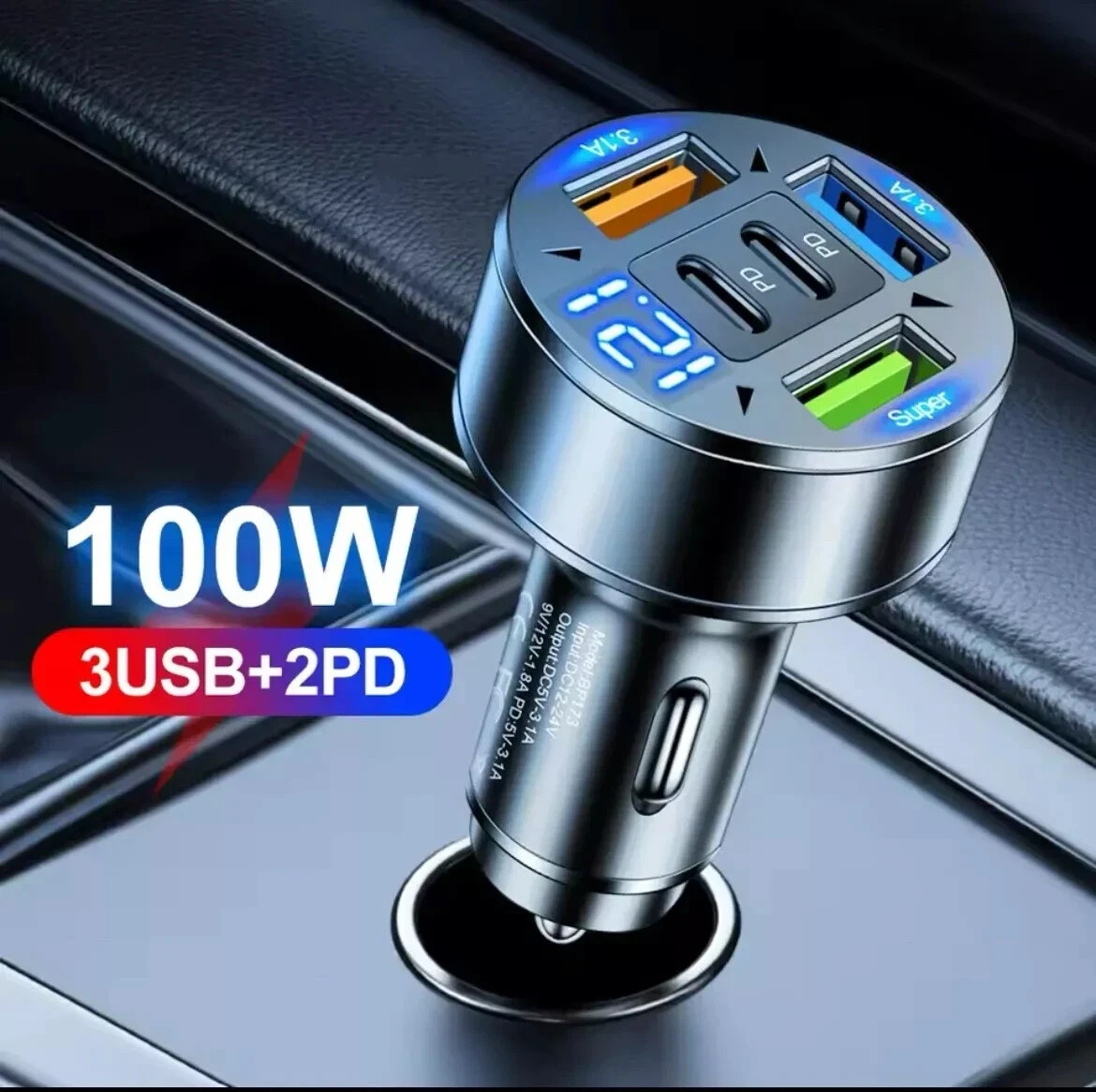
If your phone is usually the device that needs a boost, this charger gives you the faster path. Its two USB outputs support PD and QC3.0, and the combined 60W maximum (30W per port) lets two compatible phones charge at once without sacrificing speed. The digital LED display shows whether the connection is live, while over-load, over-current, and short-circuit protection keep things safe during longer drives. Construction uses flame-retardant ABS and aluminum alloy, and the input range covers 12V-24V. The limitation is clear: it does not create a 110V AC outlet, so you can't run small appliances or AC-only electronics. At its higher listed price, it costs more than the inverter, but it's the right call when fast USB output is the priority.
Final choice by use case
Choose the Car Inverter when you need an AC outlet for small electronics that can't run from USB. Choose the PD+QC3.0 charger when you want fast, dual-device charging and don't need AC power. If you mostly charge a phone while commuting, the fast charger is the easier everyday fit. If you occasionally need to power something that expects a wall outlet, the inverter is the one to have.