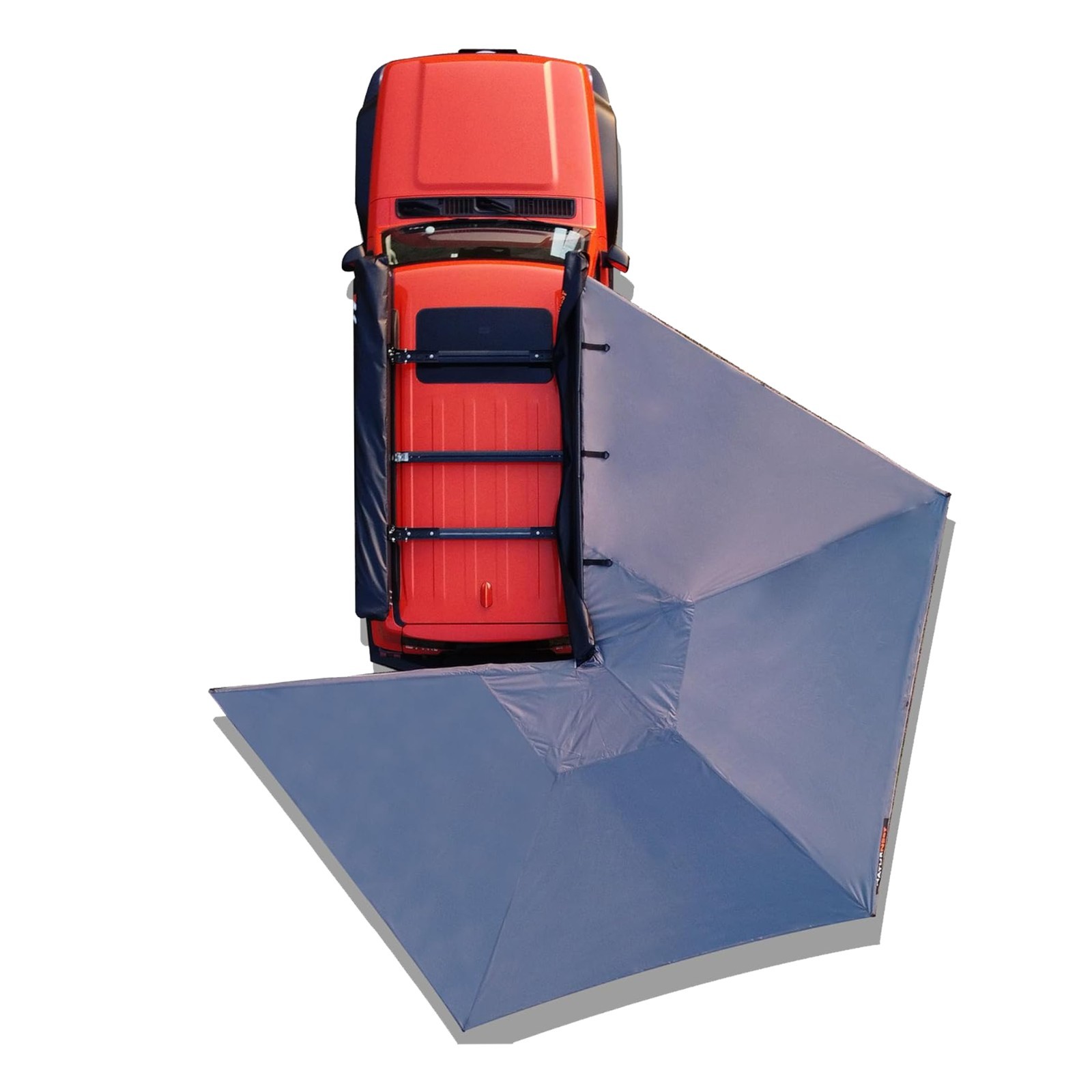

Photos from current listings. Actual item, color, and included accessories may vary.
Naturnest 270 Awning Buying Guide
The Naturnest 270 Awning is a vehicle-mounted, 270-degree freestanding shade shelter built from 280g ripstop canvas, designed for overlanding and camping setups. The core trade-off is between the convenience of a self-supporting swing-out arm system and the wind vulnerability inherent to large cantilevered awnings, so buyers must prioritize either maximum coverage or storm-worthy rigidity. The decision rule: choose a 270 awning only if you regularly camp in calm-to-moderate conditions and want rapid, pole-free deployment; if you expect high winds or need four-season durability, opt for a traditional pole-supported awning or a hard-shell 270 with integrated legs.


At a glance
- Brand
- Not synced yet
- Model
- Not synced yet
- MPN
- Not synced yet
- Category
- RV Storage, Roof & Camping
- Status
- Offers available
- Data updated
- Nov 15, 2026
Current offers
Highlights
- 280g ripstop canvas offers a strong weight-to-tear-resistance ratio, but the 130 sq ft canopy creates a large sail area that demands careful anchoring in gusty conditions.
- Passenger-side mounting means the awning swings out to the vehicle's right; driver-side versions are required for left-hand deployment, so vehicle orientation determines the correct model.
- Freestanding 270-degree arms eliminate the need for vertical poles in calm weather, enabling deployment in minutes, but integrated support legs are essential for wind resistance above moderate breezes.
- The 270-degree coverage wraps around the rear corner of the vehicle, providing continuous shade from the side to the tailgate—a key advantage over 180-degree awnings for camp kitchen and seating layouts.
Best use cases
- Best fit: Overlanders who camp in desert or forest environments with predictable calm mornings and want a fast, pole-free shade solution for side and rear vehicle access—choose the passenger-side model if your tailgate opens to the right.
- Best fit: Campers who prioritize 130 sq ft of continuous wrap-around shade for group seating and cooking areas, and who are willing to deploy included or aftermarket legs when afternoon winds pick up.
- Wrong fit: Coastal or exposed alpine campers who face frequent high winds—skip any freestanding 270 awning and choose a pole-supported traditional awning or a hard-shell 270 with integrated telescoping legs and guy-line anchors.
- Wrong fit: Buyers with a left-opening tailgate or driver-side kitchen setup—the passenger-side Naturnest will deploy away from your workspace; select a driver-side 270 awning instead.
Buying tips
- Confirm vehicle mount orientation: passenger-side awnings deploy to the right of the vehicle; if your primary camp setup (kitchen, seating) is on the left, buy a driver-side model to avoid awkward reach-around access.
- Check roof rack load capacity: a 270 awning typically weighs 40–60 lb; ensure your rack's dynamic load rating (not static) accommodates the awning plus cargo, and use at least two mounting brackets spread across crossbars.
- Match canvas weight to climate: 280g ripstop is a solid mid-weight grade for three-season use; for prolonged UV exposure or heavy rain, look for 300g+ poly-cotton or laminated fabric with taped seams.
- Plan for wind management: freestanding arms are not self-supporting in gusts above roughly 15–20 mph; budget for two telescoping legs and guy lines (often sold separately) to convert the awning into a stable shelter.
Specs
| Canopy Material | 280g ripstop canvas |
|---|---|
| Coverage Area | 130 sq ft |
| Deployment Angle | 270-degree wrap-around |
| Mounting Side | Passenger-side (right-hand) |
Alternatives to compare
Related searches
What to check before buying
- Measure your roof rack's crossbar spread and height: the awning bracket span must fit your rack bars, and the deployed canopy must clear open doors and rear hatches.
- Verify vehicle side: stand behind the vehicle facing forward—if your tailgate hinges on the right, a passenger-side awning deploys into your primary workspace; otherwise choose driver-side.
- Check rack dynamic load rating: ensure it exceeds the awning weight (typically 40–60 lb) plus any simultaneous cargo, and confirm bracket hardware matches your crossbar profile (round, square, or T-slot).
- Assess typical wind exposure at your campsites: if sustained breezes above 15 mph are common, plan to purchase or fabricate support legs and stake-down points before first use.
FAQ
Data sources: eBay / Amazon listings and product attribute feeds Data updated Nov 15, 2026.
Some links on this page are affiliate links. If you buy after clicking one, we may earn a commission at no extra cost to you. This does not change which products appear here or their order. Affiliate disclosure.