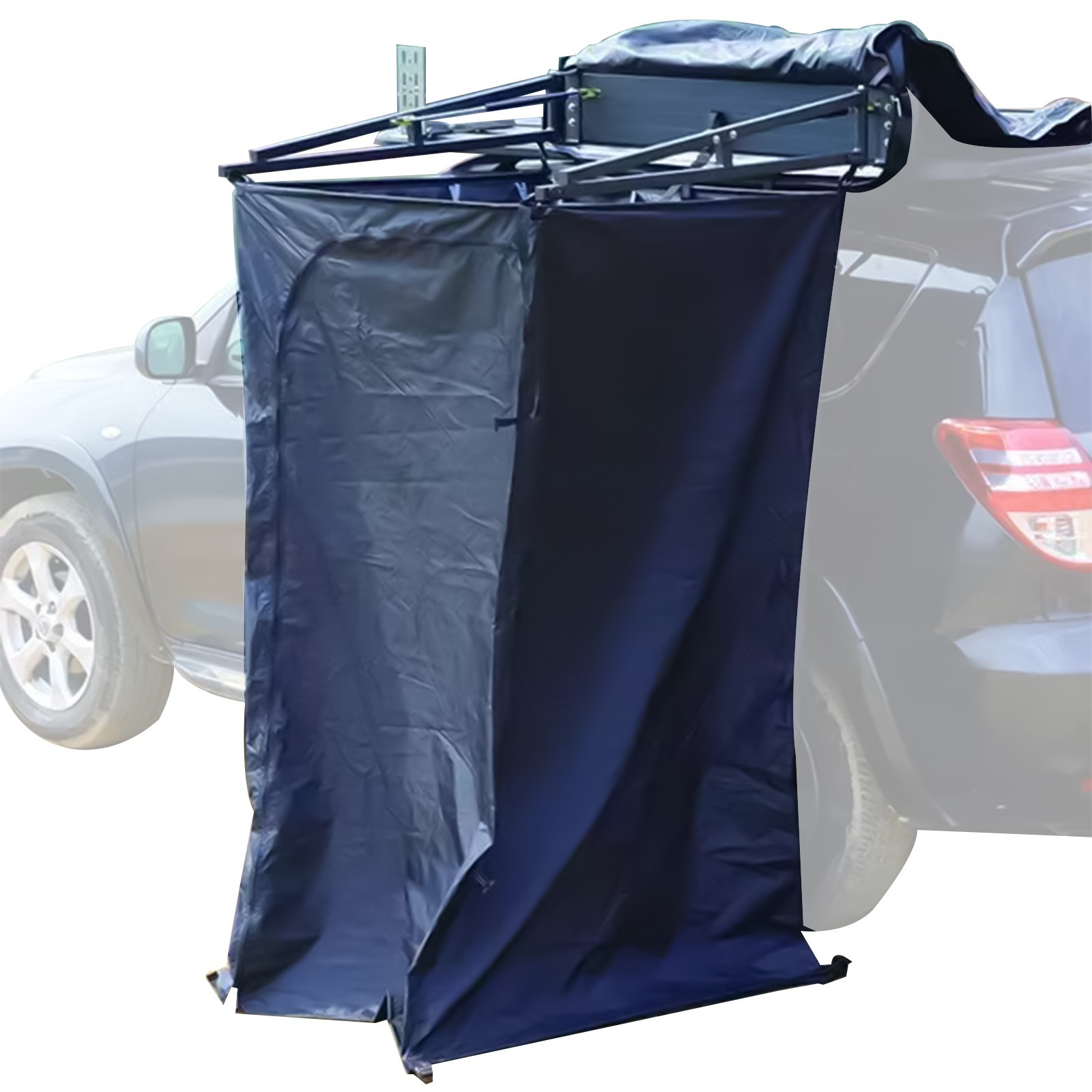

Photos from current listings. Actual item, color, and included accessories may vary.
Car Tent Buying Guide
A car tent is a vehicle-mounted shelter—either a roof-top tent (RTT) that folds or hardshells onto a roof rack or a car-side awning/privacy tent that attaches to the vehicle. The primary trade-off is weight and mounting capacity versus setup speed and weather protection: soft-shell RTTs are lighter and cheaper but slower, while hardshell and gas-strut awnings are faster but heavier and demand a rated rack. The decision rule is straightforward—match the tent's packed weight to your dynamic roof load rating and pick the shell type by how often you camp.


At a glance
- Category
- RV Storage, Roof & Camping
- Data updated
- Nov 15, 2026
Current offers
Highlights
- Soft-shell RTTs use a folding fabric body with telescoping ladder and typically weigh 90-130 lb; hardshell RTTs use a gas-strut clamshell at 120-180 lb and set up in under 60 seconds.
- Car-side awning tents attach via L-bracket or gutter mount and rely on gas struts; they require a roof rack crossbar spread of at least 30-40 inches for stable leverage.
- Dynamic roof load ratings on most SUVs and crossovers are 150-165 lb, while static capacity (tent + occupants) is 2-3x higher—the dynamic figure is the binding limit for RTT selection.
- Fabric grade separates tiers: 280-320 GSM poly-cotton canvas with PU coating resists condensation and UV better than 190T polyester, which is lighter but prone to sag and long-term UV degradation.
Best use cases
- Best fit for weekend overlanders with a rated rack: a 2-person hardshell RTT—fast pitch, low condensation, and no ladder fuss; skip soft-shell folders if you set up daily.
- Best fit for basecamp families with a large SUV or truck: a soft-shell RTT with annex room for extra sleep space; wrong fit for low-roof sedans or cars with a 100-lb dynamic limit.
- Best fit for tailgating, beach, or privacy at camp: a car-side awning/privacy tent with gas strut; skip it if you need sleeping quarters—it is a shelter, not a bed.
- Wrong fit for wet, windy climates: any tent mounted without a full rainfly and sealed seams; pick a hardshell with a taped rainfly instead of an open awning.
Buying tips
- Subtract tent weight from your vehicle's dynamic roof load rating—not static—and leave 20-30 lb headroom for crossbars, mounting hardware, and bedding left inside.
- Measure your crossbar spread before buying: most RTTs need 30-40 inches between bars, and car-side awnings need at least two crossbars for a stable three-point mount.
- Choose poly-cotton canvas (280 GSM+) over thin polyester for three-season use; polyester is acceptable only for mild, dry summer camping and weighs less.
- For hardshell vs soft-shell, count setup frequency: hardshell gas-strut models pitch in under a minute, while soft-shell folders take 3-5 minutes with ladder and rainfly.
Specs
| Tent Type | Roof-top (soft/hard) vs car-side awning |
|---|---|
| Shell Material | Poly-cotton canvas 280-320 GSM vs polyester |
| Packed Weight | 90-180 lb (RTT); awning 20-50 lb |
| Mount Standard | Crossbar spread 30-40 in / L-bracket |
Related searches
What to check before buying
- Roof rack dynamic load rating and crossbar spread measured on your specific vehicle—not the tent's static capacity.
- Vehicle height with tent installed: add 12-18 inches for hardshells and up to 30 inches for soft-shell folders to check garage and drive-thru clearance.
- Mounting hardware compatibility: factory rails, aftermarket crossbars, or gutter mounts—each tent ships with one bracket style.
- Climate and condensation: poly-cotton canvas breathes; confirm the tent includes a rainfly and taped seams for wet or cold nights.
FAQ
Data sources: eBay / Amazon listings and product attribute feeds Data updated Nov 15, 2026.
Some links on this page are affiliate links. If you buy after clicking one, we may earn a commission at no extra cost to you. This does not change which products appear here or their order. Affiliate disclosure.