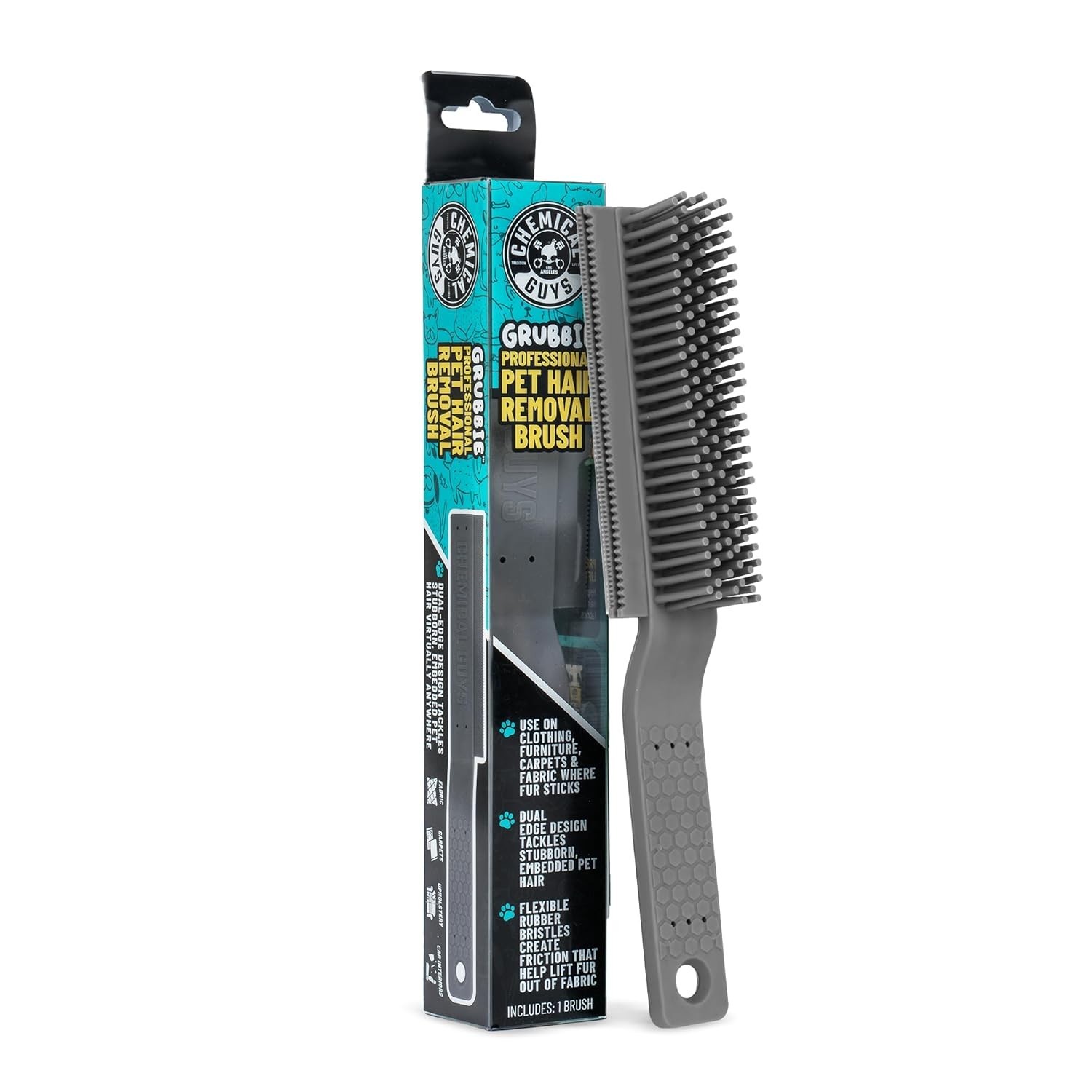

Photos from current listings. Actual item, color, and included accessories may vary.
Pet Hair Remover Buying Guide
A pet hair remover for detailing is a specialized tool that lifts embedded fur from carpets, seats, and cargo areas without damaging fabric fibers. The primary trade-off is between rubber/elastomer brushes that grip and pull hair versus vacuum-driven or adhesive tools that rely on airflow or tack. The clear decision rule: choose a rubber brush or grooved elastomer block for heavy embedded hair on automotive carpet, and skip stiff-bristle or motorized tools that fray upholstery.


At a glance
- Category
- Detailing Tools & Inspection Lighting
- Data updated
- Nov 15, 2026
Current offers
Highlights
- Rubber brush construction: molded elastomer or silicone bristle rows create friction that grabs hair; soft rubber flexes over carpet without pulling loops
- Brush-only tools require manual strokes; vacuum-assisted or motorized versions add airflow or agitation but cost more and need power
- Grooved rubber block designs excel on tight-weave automotive carpet; brush-style rows suit larger, looser surfaces like cargo liners
- Chemical Guys Professional Rubber Pet Hair Removal Brush is a brush-type elastomer tool sized for car interiors and upholstery
Best use cases
- Best fit: rubber brush for daily car detailing on fabric seats and carpet — pick a firm elastomer brush with dense bristle rows for embedded hair; skip adhesive rollers that gum up on carpet
- Best fit: grooved rubber block for heavy shedding on cargo area and floor mats — choose a wide block with deep grooves; skip narrow brushes that need dozens of passes
- Wrong fit: stiff nylon-bristle or metal-bristle tools on leather or microfiber — they abrade surfaces; use a soft rubber edge or vacuum crevice tool instead
- Wrong fit: motorized pet-hair vacuums for quick detailing — they underperform on embedded hair without a rubber pre-scrub; use brush first, then vacuum
Buying tips
- Match tool width to surface: 4–6 in brush heads cover seat cushions efficiently; narrower 2–3 in heads reach crevices and seat rails
- Choose elastomer bristles over nylon: rubber grips hair via friction and rinses clean; nylon bristles push hair deeper into carpet pile
- For heavy embedded hair, pick a brush with angled or tapered bristle rows that dig into pile; flat rows glide over without lifting
- Rubber blocks with V-grooves channel hair into ridges for easy removal; smooth blocks smear hair and need more passes
Specs
| Tool Type | Rubber brush / grooved block / roller |
|---|---|
| Bristle Material | Elastomer vs nylon vs silicone |
| Head Width | 2–6 in (crevice to seat) |
| Power Source | Manual / USB / battery |
Related searches
What to check before buying
- Measure seat cushion and carpet area width to confirm brush head covers at least one-third of the surface per stroke
- Check upholstery type: rubber brushes are safe on fabric, carpet, and vinyl; avoid on unfinished leather or suede
- Confirm the tool fits your hand and storage space — brush length under 6 in fits door pockets and detailing bags
- Have a vacuum or lint roller on hand for final pass — rubber brushes lift hair into a pile that needs removal
FAQ
Data sources: eBay / Amazon listings and product attribute feeds Data updated Nov 15, 2026.
Some links on this page are affiliate links. If you buy after clicking one, we may earn a commission at no extra cost to you. This does not change which products appear here or their order. Affiliate disclosure.