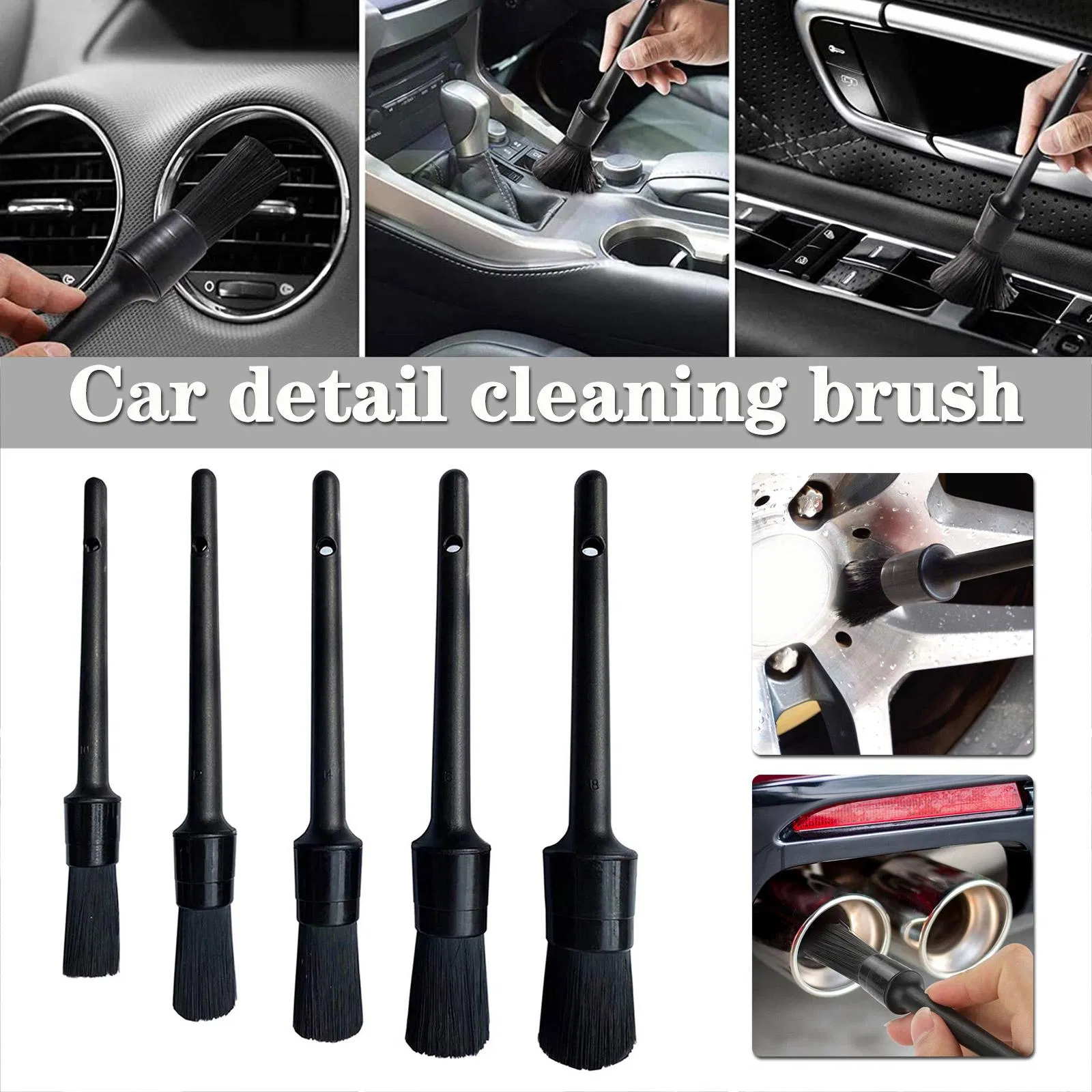

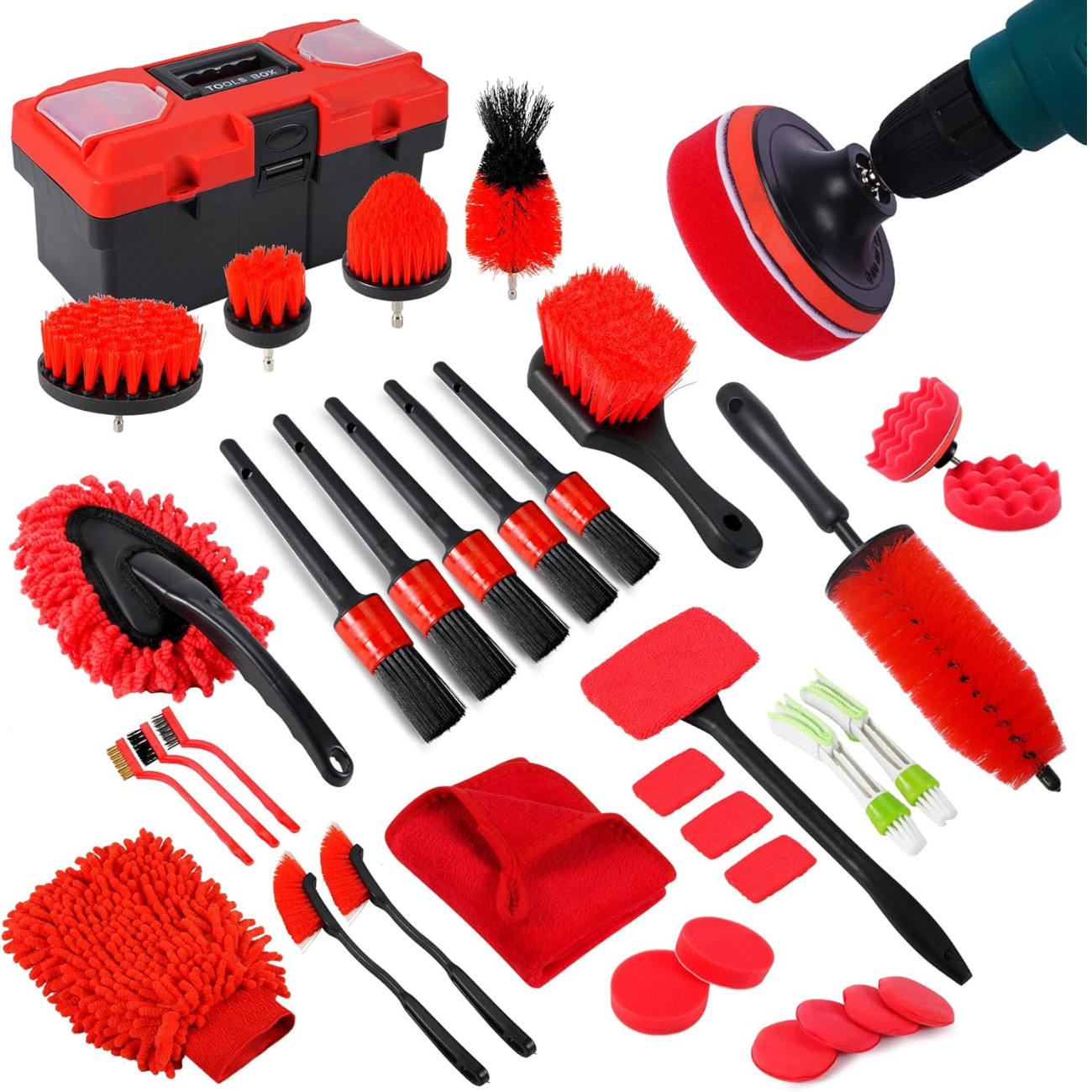
Photos from current listings. Actual item, color, and included accessories may vary.
Auto Detailing Brush Buying Guide
An auto detailing brush is a soft-bristled tool engineered to lift dirt from paint, wheels, and interior crevices without marring surfaces, where bristle material and ferrule/brush construction dictate whether it cleans safely or scratches. The core trade-off is natural boar hair (soft, absorbent, gentle on paint) versus synthetic nylon/PP (stiffer, chemical-resistant, better for wheels and rubber) — plus whether the brush is metal-free. The decision rule: buy brushes with soft, densely packed, chemically resistant bristles and metal-free bodies for paint and alloy contact; skip any brush with exposed crimped ferrules or stiff synthetic flags for finish work.


At a glance
- Category
- Detailing Tools & Inspection Lighting
- Data updated
- Nov 15, 2026
Current offers
Highlights
- Boar hair bristles are naturally tapered and soft, ideal for paint and delicate interior surfaces, but they soften and degrade faster in hot water and strong alkaline cleaners.
- Synthetic nylon/PP bristles resist wheel acids and degreasers and hold their stiffness, making them the choice for tires, wheel barrels, and engine bays.
- Metal-free construction (plastic or rubberized handle, no exposed crimped ferrule) prevents accidental paint chips and alloy scratches during agitation.
- Bristle density and tip splitting matter more than length: densely packed, flagged tips trap and lift dirt, while sparse stiff bristles push grit across the surface.
Best use cases
- For paint, glass, and delicate interior trim: pick a soft boar-hair or ultra-soft synthetic brush with a metal-free body — skip stiff wheel brushes entirely on these surfaces.
- For wheels, tires, and engine bays: choose a stiff synthetic nylon brush with chemical resistance and a long handle — boar hair softens and wears out too fast here.
- For lug nuts, badges, grilles, and tight seams: use a small-diameter detailing brush (round or tapered) with dense synthetic bristles — a wide wash brush cannot reach these crevices.
- For a complete kit: pair one soft paint brush, one stiff wheel brush, and two small crevice brushes — a single 35-piece kit usually sacrifices bristle quality for tool count.
Buying tips
- Match bristle to surface: boar hair or ultra-soft synthetic for paint and gloss trim; medium nylon for interior plastics; stiff nylon/PP for wheels, tires, and undercarriage.
- Choose brushes with metal-free ferrules and handles — exposed crimped metal is the leading cause of accidental paint and alloy chips during detailing.
- Prioritize dense bristle packing with flagged/split tips over brush length; a short dense brush cleans better and lasts longer than a long sparse one.
- For wheel and engine use, confirm the bristles are rated for alkaline and acidic wheel cleaners — natural boar hair degrades quickly in these chemicals.
Specs
| Bristle Material | Boar hair / Nylon / PP |
|---|---|
| Bristle Stiffness | Soft / Medium / Stiff |
| Ferrule Type | Metal-free vs Crimped metal |
| Brush Head Size | Small crevice to large wash |
Related searches
What to check before buying
- Measure the tightest gap you need to clean (badge seams, lug nut wells, grille slots) and select a brush head diameter that fits with 2–3 mm clearance.
- Confirm your wheel cleaner or degreaser type (alkaline, acidic, or pH-neutral) and choose synthetic bristles rated for that chemistry.
- Check that the brush handle and ferrule are fully non-metal if the brush will contact painted or polished surfaces.
- For interior work, verify the bristles are soft enough for plastic and leather and that the brush can be cleaned and dried without shedding.
FAQ
Data sources: eBay / Amazon listings and product attribute feeds Data updated Nov 15, 2026.
Some links on this page are affiliate links. If you buy after clicking one, we may earn a commission at no extra cost to you. This does not change which products appear here or their order. Affiliate disclosure.