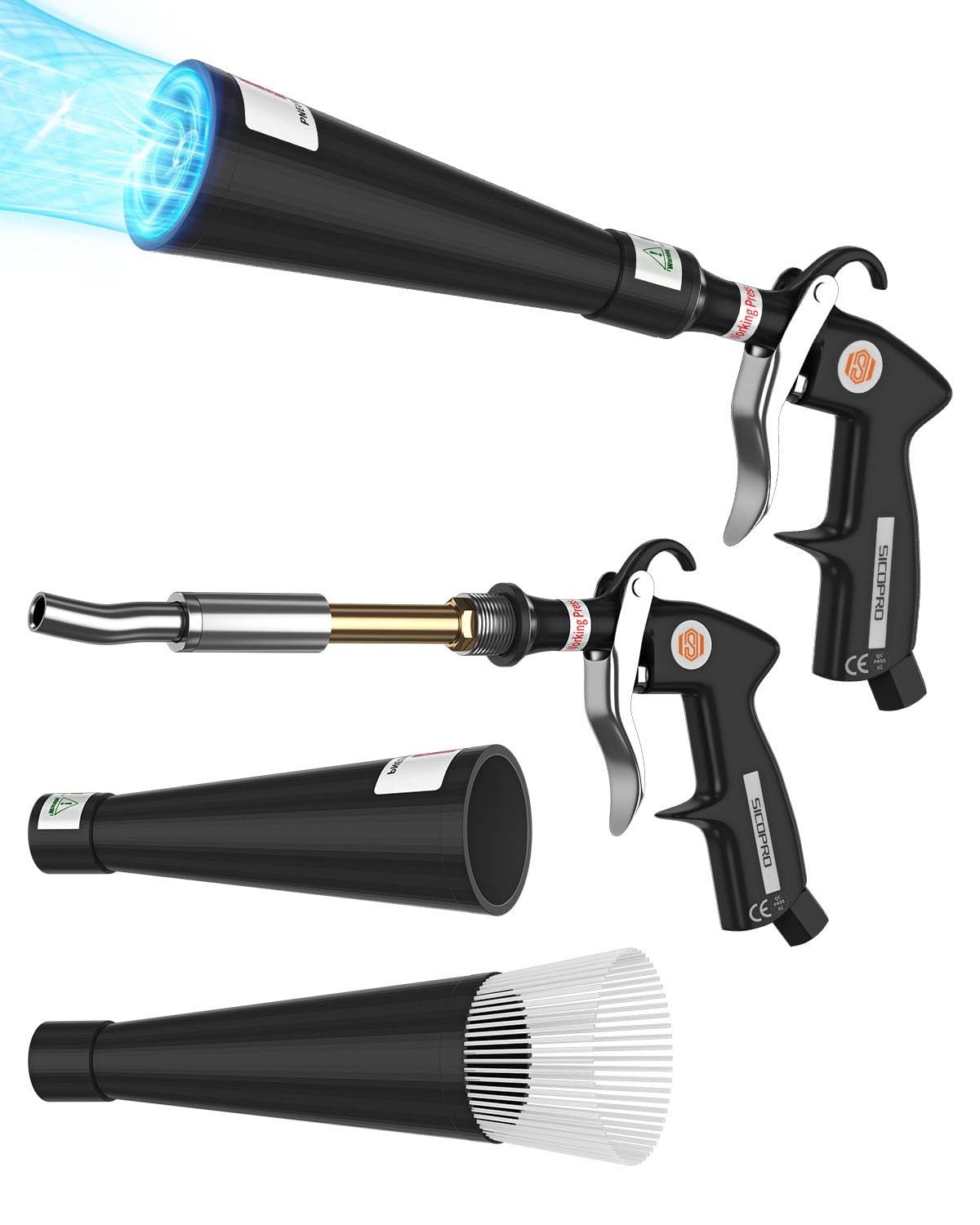

Photos from current listings. Actual item, color, and included accessories may vary.
Air Blower Buying Guide
An air blower for car detailing is a handheld or bench-mounted device that delivers high-velocity, filtered air to strip water from panels, grilles, and emblems without touching the paint. The core trade-off is between brushed AC motors (cheap, heavy, short-lived) and brushless DC motors (lighter, efficient, longer service life) paired with sealed bearings and variable-speed triggers. Choose a brushless unit with at least 2.5 CFM and a rubberized nozzle; skip any blower that lacks a debris filter or uses a brushed motor rated for under 500 hours.


At a glance
- Category
- Detailing Tools & Inspection Lighting
- Data updated
- Nov 15, 2026
Current offers
Highlights
- Brushless DC motors outlast brushed AC motors by roughly 3-5x in continuous detailing use — look for rated life above 1,000 hours and sealed dual ball bearings.
- Airflow of 2.5-4.0 CFM at 60-90 mph nozzle velocity clears standing water from tight gaps; below 2.0 CFM leaves droplets in trim and badge recesses.
- Variable-speed triggers with lock-on and a tapered rubber nozzle concentrate air without scratching; fixed-speed units often exceed safe pressure on soft paint.
- Washable or replaceable intake filters prevent dust and pollen from being blasted onto wet surfaces — sealed motor housings are mandatory for outdoor detailing.
Best use cases
- Best fit: weekly two-bucket wash owners drying a coated daily driver — pick a cordless brushless blower with 3+ CFM and a 4.0Ah battery for 15-20 minutes of continuous drying.
- Best fit: professional detailers doing paint correction and coating — choose a corded brushless unit with variable speed and a 6-foot hose so airflow never drops mid-panel.
- Wrong fit: using a shop-vac in reverse or a leaf blower — these lack filtration, deliver uncontrolled velocity, and can push grit into fresh clear coat.
- Skip: sub-2.0 CFM mini blowers marketed for keyboards — they cannot move enough air volume to sheet water off a hood or roof panel.
Buying tips
- Match CFM to panel size: 2.5-3.0 CFM handles motorcycles and compact cars; 3.5-4.0+ CFM is needed for full-size SUVs and vans.
- Choose brushless over brushed: brushed motors lose 20-30% efficiency as brushes wear and typically fail before 500 hours of detailing use.
- Cordless buyers should standardize on one battery platform — a 4.0Ah pack delivers roughly 15-20 minutes at high speed; carry a spare or step up to 5.0Ah.
- Nozzle material matters: rubber or soft-touch tips flex on contact and protect trim; hard plastic nozzles can mar paint if bumped.
Specs
| Motor Type | Brushless DC vs Brushed AC |
|---|---|
| Airflow | 2.5-4.0 CFM / 60-90 mph |
| Power Source | Corded AC or 18-20V Battery |
| Filtration | Washable intake filter, sealed housing |
Related searches
What to check before buying
- Measure your drying workflow: one car typically needs 10-15 minutes of continuous airflow, so confirm battery runtime or cord length reaches all panels.
- Verify the intake filter is washable or replaceable and that the motor housing is sealed against moisture — detailing blowers operate in wet environments.
- Check nozzle compatibility: standard 1.25-inch or 1.5-inch tapered tips accept common rubber attachments; proprietary fittings limit upgrades.
- For corded models, confirm the plug matches your region (NEMA 5-15 for North America, Type G/F for UK/EU) and that the cord reaches your driveway or garage outlet.
FAQ
Data sources: eBay / Amazon listings and product attribute feeds Data updated Nov 15, 2026.
Some links on this page are affiliate links. If you buy after clicking one, we may earn a commission at no extra cost to you. This does not change which products appear here or their order. Affiliate disclosure.