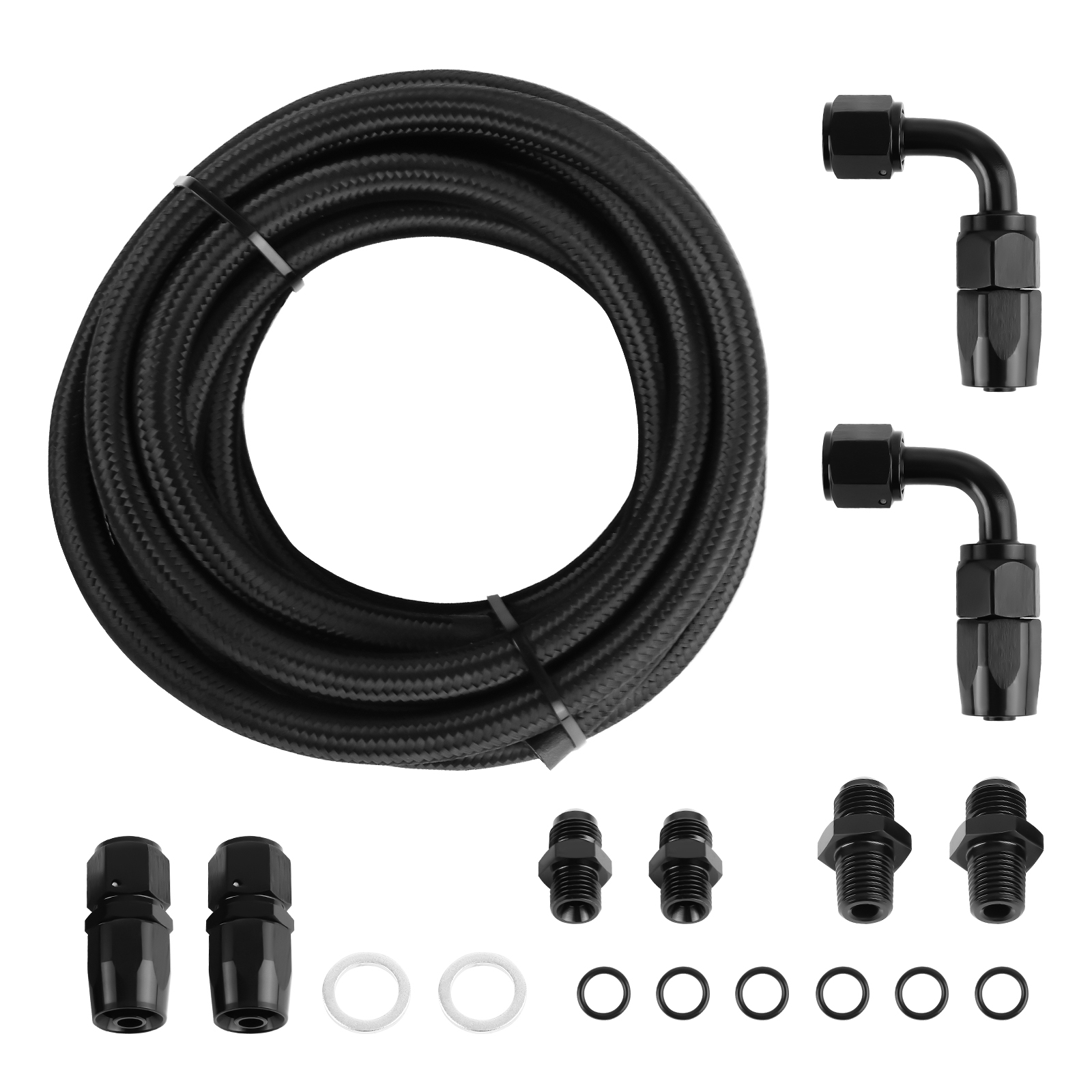

Photos from current listings. Actual item, color, and included accessories may vary.
Transmission Cooler Buying Guide
A transmission cooler is a heat exchanger that adds dedicated fluid-to-air cooling capacity beyond the factory radiator tank, extending fluid and clutch life under towing, hauling, or stop-and-go load. The core trade-off is cooler type and core construction: tube-and-fin with barbed hose fits universal retrofit kits, while stacked-plate with AN fittings handles higher pressure and cleaner plumbing at higher cost. Buy a stacked-plate or plate-and-fin core rated for your GVWR and line pressure, and skip thin tube-and-fin cores with push-on hose for heavy towing or high-stall converters.


At a glance
- Category
- Transmission & Drivetrain Parts
- Data updated
- Nov 15, 2026
Current offers
Highlights
- Stacked-plate (plate-and-fin) cores cool 30-50% more per frontal area than tube-and-fin and resist 250+ psi internal pressure.
- Tube-and-fin cores are the budget standard for universal kits, typically rated near 150-200 psi and suited to stock line pressure.
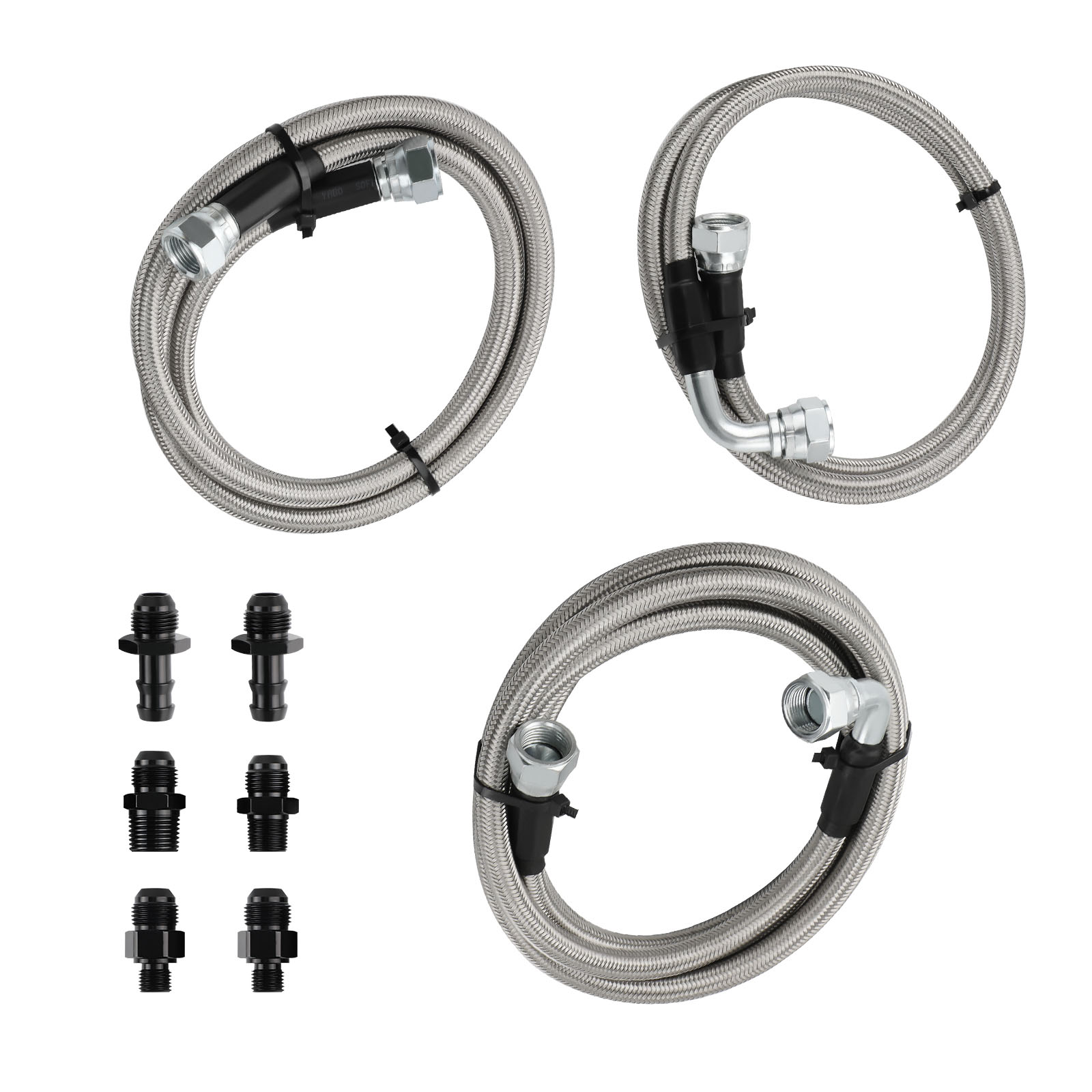
- Hose-end type determines installation: barbed fittings accept 5/16 or 3/8 inch rubber line with clamps; AN-6 or AN-8 flared fittings need matching braided hose and adapters.
- Mounting method matters: nylon zip-tie through-core mounting is universal but can abrade the radiator; bracket-and-bolt mounts preserve both cores.
Best use cases
- Best fit: universal retrofit on a 4L60E/4L65E or 47RE with stock converter — pick a tube-and-fin kit with 3/8 inch barbed fittings, clamps, and 8-10 feet of hose included.
- Best fit: towing or heavy hauling with a high-stall converter — choose a stacked-plate core plumbed in series after the radiator tank, with AN-6 lines and a thermostatic bypass for cold climates.
- Wrong fit: using push-on barbed hose on a high-pressure circuit or with a stacked-plate core rated for AN lines — the clamp joint is the first failure point under pressure and heat cycling.
- Wrong fit: mounting a large core in front of the A/C condenser without checking airflow — restricted condenser airflow raises A/C head pressure and coolant temperature.
Buying tips
- Size by GVWR and use: roughly 1 row per 1,000 lb of combined vehicle and trailer weight for tube-and-fin, and about 30% less core for stacked-plate of equal capacity.
- Match line size to the return line: 5/16 inch is common on lighter units, 3/8 inch on trucks and towing applications; undersized line chokes flow and negates cooler capacity.
- Plumb in series after the radiator cooler (radiator outlet to auxiliary inlet) so the auxiliary unit sees already-tempered fluid and avoids overcooling in winter.
- Prefer cores with a brazed aluminum stack and pressure-tested rating over epoxy-bonded tube-and-fin, which degrades with heat cycling and vibration.
Specs
| Core Type | Stacked-plate vs tube-and-fin |
|---|---|
| Line Fitting | Barbed 5/16-3/8 in vs AN-6/AN-8 |
| Pressure Rating | 150-200 psi vs 250+ psi |
| Mount Style | Through-core ties vs bolt brackets |
Related searches
What to check before buying
- Measure the mounting space in front of the radiator or condenser: most universal kits are 3/4 to 1-1/2 inch thick and 5 to 10 inches tall, so confirm clearance to the grille and hood latch.
- Confirm transmission line fitting thread and size at the radiator or case — 1/4, 1/8, or 3/8 NPT and 5/16 vs 3/8 inch hose barbs are not interchangeable without adapters.
- Check climate: in sustained sub-freezing weather, a thermostatic bypass or radiator-first plumbing prevents fluid below operating temperature.
- Verify kit completeness: hose length, clamps, mounting ties or brackets, and adapter fittings should all be included for a same-day install.
FAQ
Data sources: eBay / Amazon listings and product attribute feeds Data updated Nov 15, 2026.
Some links on this page are affiliate links. If you buy after clicking one, we may earn a commission at no extra cost to you. This does not change which products appear here or their order. Affiliate disclosure.