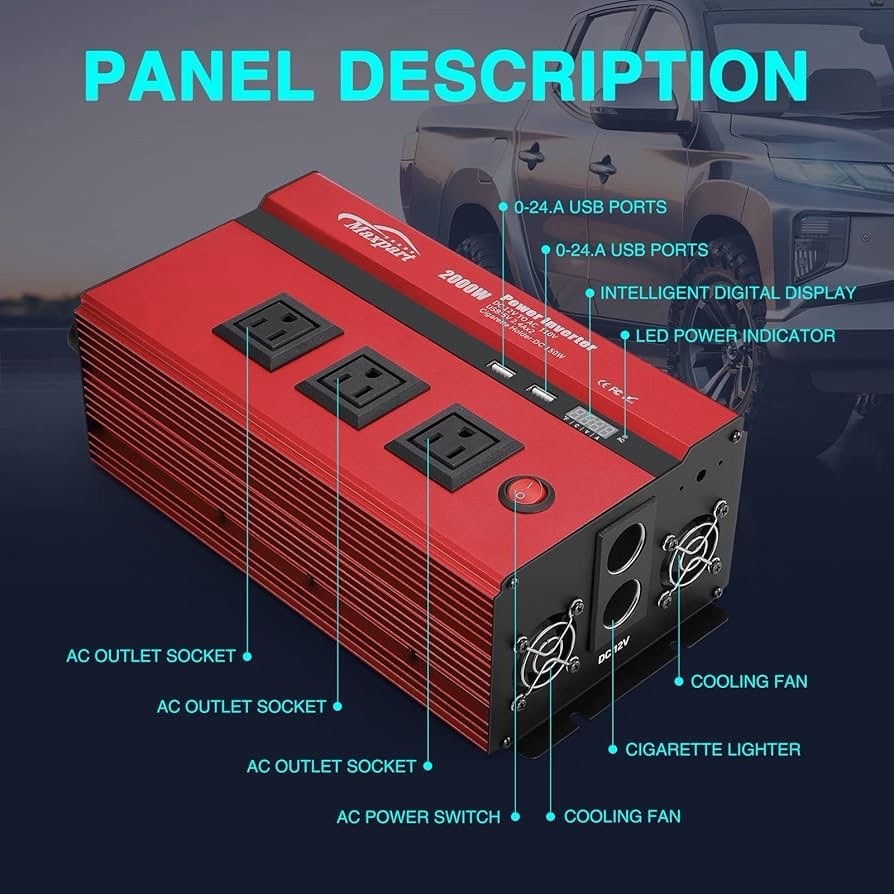

Photos from current listings. Actual item, color, and included accessories may vary.
Maxpart 2000W Power Inverter Buying Guide
The Maxpart 2000W Power Inverter is a 12V DC to 110/120V AC modified sine wave converter marketed for car and truck use. The critical trade-off is peak versus continuous wattage and modified versus pure sine output, which determines whether it safely runs resistive loads or risks damaging motors and electronics. Buyers should treat it as a budget modified-sine unit for resistive loads only, and step up to a pure sine inverter for any inductive or sensitive equipment.


At a glance
- Brand
- Not synced yet
- Model
- Not synced yet
- MPN
- Not synced yet
- Category
- Car Power
- Status
- Offers available
- Data updated
- Nov 15, 2026
Current offers
Highlights
- 2000W is a peak rating; continuous output on budget 12V units is typically 50-60% of peak, so plan for roughly 1000-1200W sustained.
- Modified sine wave output is incompatible with laser printers, CPAP machines, and variable-speed motors; pure sine is required for those loads.
- 12V input at 2000W draws about 170-185A, mandating 2-4 AWG copper cable and a 200-250A fuse for safe installation.
- Most 2000W-class inverters ship with dual AC outlets and a USB port but no battery cables, so cabling is a separate purchase.
Best use cases
- Best fit: powering resistive loads under 1200W continuous (laptop chargers, LED work lights, small heaters, phone charging) from a car or truck 12V system.
- Wrong fit: running power tools, compressors, or appliances with motors — modified sine wave causes overheating and torque loss; choose pure sine instead.
- Wrong fit: hardwiring to a vehicle electrical system for continuous high-draw use without upgrading the alternator and cabling — stock 12V wiring cannot sustain 170A+.
- Right fit for occasional camping or road-trip use with a dedicated deep-cycle battery, not for a daily-driver stock electrical system.
Buying tips
- Size the inverter at 1.5-2x your continuous load: a 700W appliance needs a 1400W+ continuous inverter, not a 2000W peak unit.
- For any load with a motor or compressor, require pure sine wave output; modified sine is only acceptable for resistive heating and basic electronics.
- Match cable gauge to current: at 12V and 2000W, use 2 AWG for runs under 10 feet and 4 AWG up to 6 feet, with a 200-250A ANL fuse.
- Confirm the DC input voltage matches your system — 12V inverters cannot be used on 24V or 48V battery banks without damage.
Specs
| Output Waveform | Modified sine (pure sine for motors) |
|---|---|
| Peak vs Continuous | 2000W peak / ~1000-1200W continuous |
| DC Input Voltage | 12V DC (not 24V/48V compatible) |
| AC Output | 110-120V AC, 60Hz, dual outlets |
Alternatives to compare
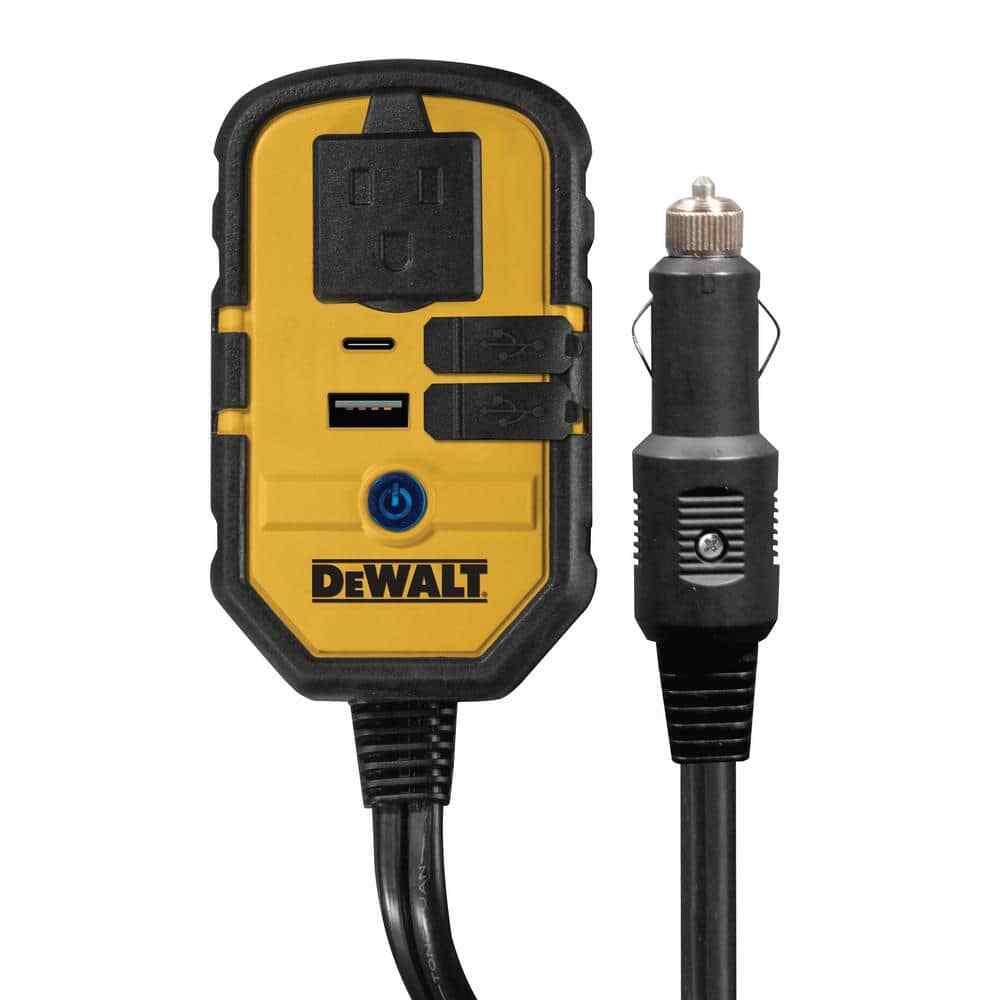
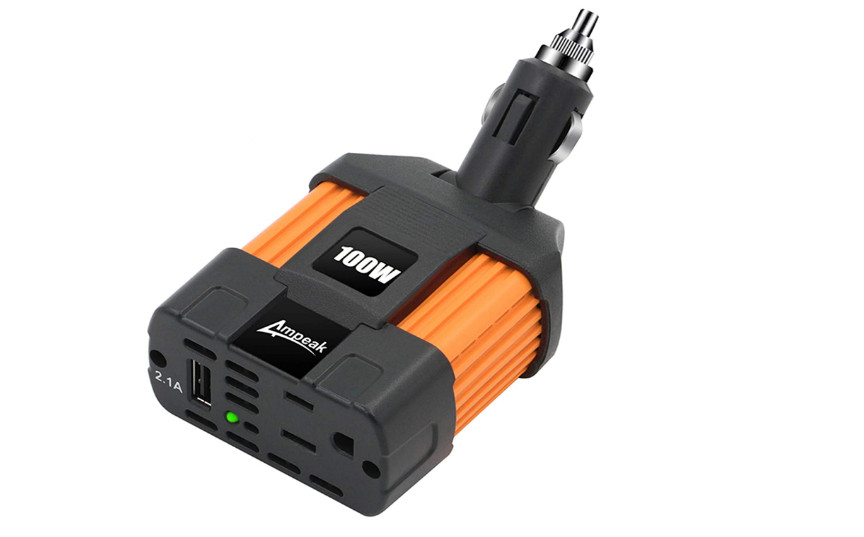
Related searches
What to check before buying
- Measure the continuous wattage of every device you plan to run and keep the total under 60% of the inverter's peak rating.
- Verify your vehicle's alternator output can handle the additional 170A draw, or plan to run from a separate deep-cycle battery.
- Confirm you have 2-4 AWG copper cable, a 200-250A fuse, and short cable runs under 10 feet before installation.
- Check that your devices are resistive or simple electronics — any motor, compressor, or medical device requires pure sine wave.
FAQ
Data sources: eBay / Amazon listings and product attribute feeds Data updated Nov 15, 2026.
Some links on this page are affiliate links. If you buy after clicking one, we may earn a commission at no extra cost to you. This does not change which products appear here or their order. Affiliate disclosure.